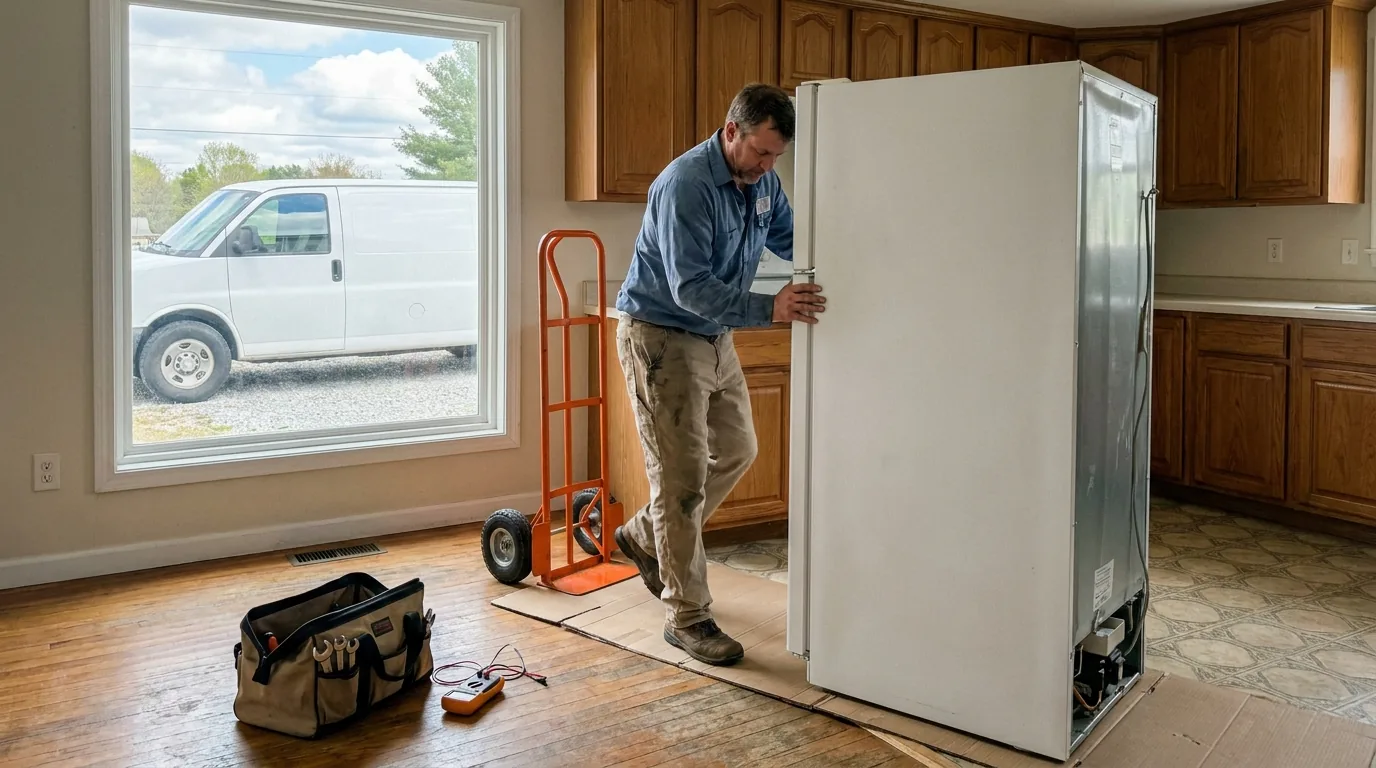
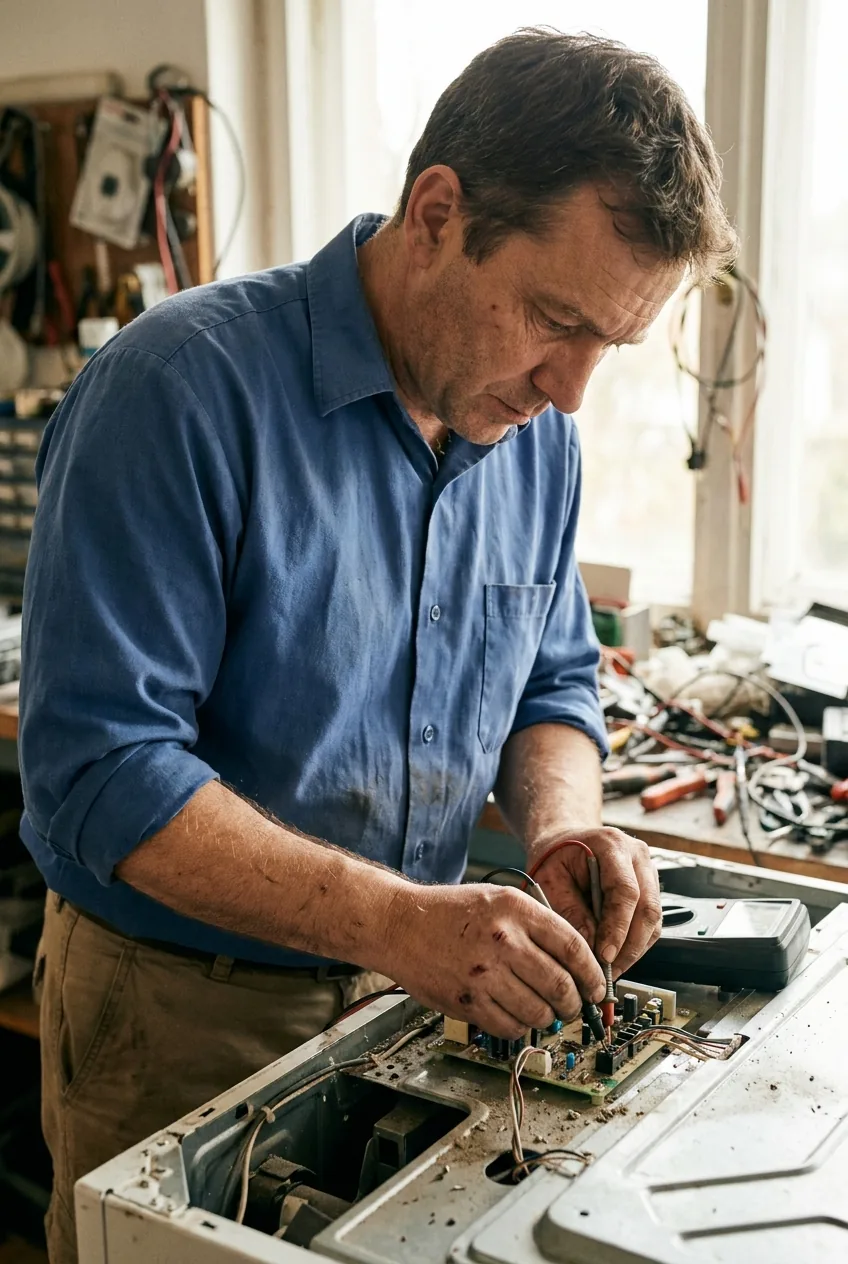
Answer the dead-fridge call in 30 seconds. Order the LG control board from the kitchen. Know if the $185 diagnostic and $340 part repair beats your 35% margin target.
$1 for 14 days, then $19/mo. Card required. Cancel any time.
$79/mo vs $99–$299 industry standard·20-min migration from HCP, Jobber, ServiceTitan·No per-seat fees, ever
Features appliance repair shops actually use
Built for Appliance Repair Shops
The 5 things that decide whether the diagnostic call turns into a profitable two-trip repair or a money-losing four-trip nightmare. Same-day diagnostic dispatch, on-site parts ordering with brand catalogs, customer portal with parts ETA and repair status, real margin per job for parts and labor and the second trip, and address notes saved with appliance specs so the warranty claim isn't a 90-minute hunt. All in one app. Built by people who've replaced an LG linear compressor in a 4-door French-door fridge with the customer watching from the breakfast nook.
Same-Day Diagnostic Dispatch
The dead-fridge call comes in at 9:14am. Your closest tech with the right diagnostic gear gets it in one tap. Customer gets an automatic text: David is on his way. ETA 38 minutes. Diagnostic fee $95, applied to repair if you choose to proceed. No surprises at the door.
On-Site Parts Ordering
Tech identifies the LG LFXS28968S compressor failure on-site. Pulls up the part in the catalog, confirms availability, orders to the truck or the customer's address. Customer sees the part cost, lead time (next-day vs 5-day), and the labor estimate before he leaves the house. The repair is on the calendar before the diagnostic invoice prints.
Customer Portal with Parts ETA
Customer sees the diagnostic results, the quoted repair, the ordered part, and the live ETA. No call us next week to check status. Customer pulls up the portal Saturday morning and sees the part lands Tuesday, repair scheduled Wednesday at 10am.
Real Margin Per Repair
Diagnostic fee, part cost, your part markup, two trips of labor, drive time, tracked per job. Your $340 LG compressor repair shows 41% margin after the second trip. Your $135 washer pump shows 67% margin for in and out same day. Your $850 dishwasher control board shows 18% because the part was wrong twice.
Appliance and Warranty Notes
Brand, model, serial, install date, warranty status, prior repair history. When the customer calls back in 8 months, your tech pulls up the address and sees the LG fridge is now 4 months past the parts warranty. The conversation is honest from the first sentence.
Included on Crew at $39 a month or Business at $79 a month. Starter ($19/mo) covers unlimited jobs, quotes, invoices, Stripe payments, customer portal, online booking, recurring billing, and CSV export. Step up to Crew for texting, AI, and dispatch.
Why appliance shops switch
Why Appliance Repair Shops Choose Claver
Two Trips, One-Trip Economics
Appliance repair is a two-trip business with one-trip economics. Trip one is the diagnostic. Trip two is the repair after the part comes in. The shops that win make the second trip a 35-minute install. The shops that lose make it a third and fourth trip because the wrong part shipped or the diagnostic missed the secondary failure.
Claver structures every job around the two-trip cycle from the first call. Diagnostic fee captured up front. Parts ordered on-site with brand catalogs. Customer sees the ETA in their portal. Repair scheduled the day the part lands. Most appliance shops get to a clean two-trip rhythm within their first month, and stop bleeding the margin to third and fourth trips.
The portal is the engine. Margin tracking is what tells you which repairs to chase.
When the dead-fridge call hits at 9:14am Tuesday, your dispatch board shows every tech's GPS location and what is currently in their truck. David is your closest tech with refrigeration gear and is finishing a washer install at 9:42am. Drag the diagnostic to Davids row. The customer gets an automatic text in 4 seconds: Davids on his way. ETA 38 minutes. Diagnostic fee $95, applied to repair if you choose to proceed. The customer stops Googling competitors. David opens the app and sees the address, fridge brand (LG), model (LFXS28968S), and the symptom (warm temps, no clicking from the compressor).
The On-Site Diagnostic
On-site, the diagnostic identifies the LG linear compressor failure, a known issue on this model. David pulls up the LG parts catalog on his phone, confirms the LCNB-3001 compressor at $385 with next-day air, and presents the customer with the full repair quote: $385 part and $95 already-paid diagnostic credited and $245 labor for the swap equals $630 total. Two-week parts warranty plus 90-day labor. The customer sees the breakdown, sees the repair beats a $1,800 replacement fridge, and signs. The part is ordered before David leaves the kitchen. The repair is on Wednesday at 10am.
After the repair, every part and every minute of labor is tracked. Your $630 LG compressor repair shows 41% margin after the second trip and the next-day air upcharge. Your $135 washer pump shows 67% for in and out same day with the part on the truck. Your $850 dishwasher control board shows 18% because the wrong part shipped twice and you ate the freight back to the supplier. Now you know which brands and which repairs to chase, which to reprice, and which models to politely refuse next time.
Appliance and Warranty Notes
Appliance and warranty notes are what make every callback profitable. LG LFXS28968S, install date November 2021 (purchased from Best Buy), parts warranty expired November 2024, prior repair April 2023 (ice maker assembly under warranty), customer prefers Saturday morning appointments. When the customer calls back in 2026 about a different symptom, your tech pulls up the address and sees the fridge is now 4 months past parts warranty, the prior repair, and the customers preferences. The conversation is honest from the first sentence, not a 30-minute discovery call disguised as customer service.
And the customer portal closes the loop on the second-trip wait. Customer pulls up the portal Saturday morning and sees: diagnostic complete, LG compressor ordered (next-day air), expected delivery Monday, repair scheduled Wednesday at 10am, total quoted $630. No call us next week to check status. No I never heard back. The customer trusts the timeline because she can see it. The repair lands on Wednesday and you book the next two-trip job for the same week, instead of fielding three angry status calls.
Cancel anytime. 20-minute migration from your current tool.
Pricing
Pricing That Works for Appliance Repair Shops
$19/mo to start. $39/mo for growing teams. $79/mo for the full toolkit. AI summaries, app phone line, dispatch board, parts ordering, real-time margin alerts, and customer portal. Same plans as every Claver page, no appliance upsell.
Simple pricing, no free tier
Every plan includes unlimited jobs, quotes, invoices and Stripe payments. Texting and AI start on Crew. The phone system and full back office are on Business.
$1 for your first 14 days on Starter · Cancel anytime · Your data exports in CSV
Common questions
Common appliance repair software questions
No marketing dance. The questions appliance repair owners actually ask before they sign up.
Does Claver handle the two-trip diagnostic and repair cycle?+
Yes. Diagnostic fee captured up front (typically $85-$95, applied to repair if customer proceeds). Parts ordered on-site from brand catalogs (LG, Whirlpool, Samsung, GE, Bosch, KitchenAid). Customer sees the ETA in their portal. Repair auto-schedules the day the part lands. Most shops report a clean 80% two-trip rhythm within their first month, and stop losing margin to third and fourth trips.
Can it order parts on-site from the brand catalogs?+
Yes. Tech identifies the failure on-site, pulls up the part in the catalog (LG, Whirlpool, Samsung, GE, Bosch, KitchenAid, Sub-Zero, Wolf), confirms availability and price and lead time, and orders to the truck or the customer's address. Customer sees the part cost, lead time (next-day vs 5-day), and labor estimate before the tech leaves the kitchen. The repair is on the calendar before the diagnostic invoice prints.
Can I import customers from ServiceTitan, Housecall Pro, or Jobber?+
Yes. Export your customer list as CSV from your current tool. ServiceTitan, Housecall Pro, Jobber, FieldEdge, RepairShopr, and upload it to Claver. The wizard maps the columns. Most appliance repair shops finish the migration in 20-30 minutes. We'll personally help if anything looks off, email [email protected].
Does Claver track appliance and warranty history per address?+
Yes. Brand, model, serial, install date, warranty status (parts and labor separately), full repair history. When the customer calls back in 8 months, your tech pulls up the address and sees the LG fridge is now 4 months past parts warranty, the conversation is honest from the first sentence, not a 30-minute discovery call disguised as customer service.
What does Claver cost for an appliance repair shop?+
$19/mo for Starter (2 users). $39/mo for Crew (8 users) when you want texting, AI, and the dispatch board. $79/mo for Business with the full toolkit, call recording, dispatch board, real-time margin alerts, customer portal with parts ETA, ad-conversion tracking. No contract. Cancel anytime.
Your current software owns your customer list. We don't want to.
Your data exports as CSV the day you leave — your full customer list, every job, every invoice. Your payments go directly through your own Stripe, never ours. Claver starts at $19/mo flat, no contract, no per-seat fees.
Start your $1 trial
14 days for $1, then $19/mo. Cancel any time from settings.