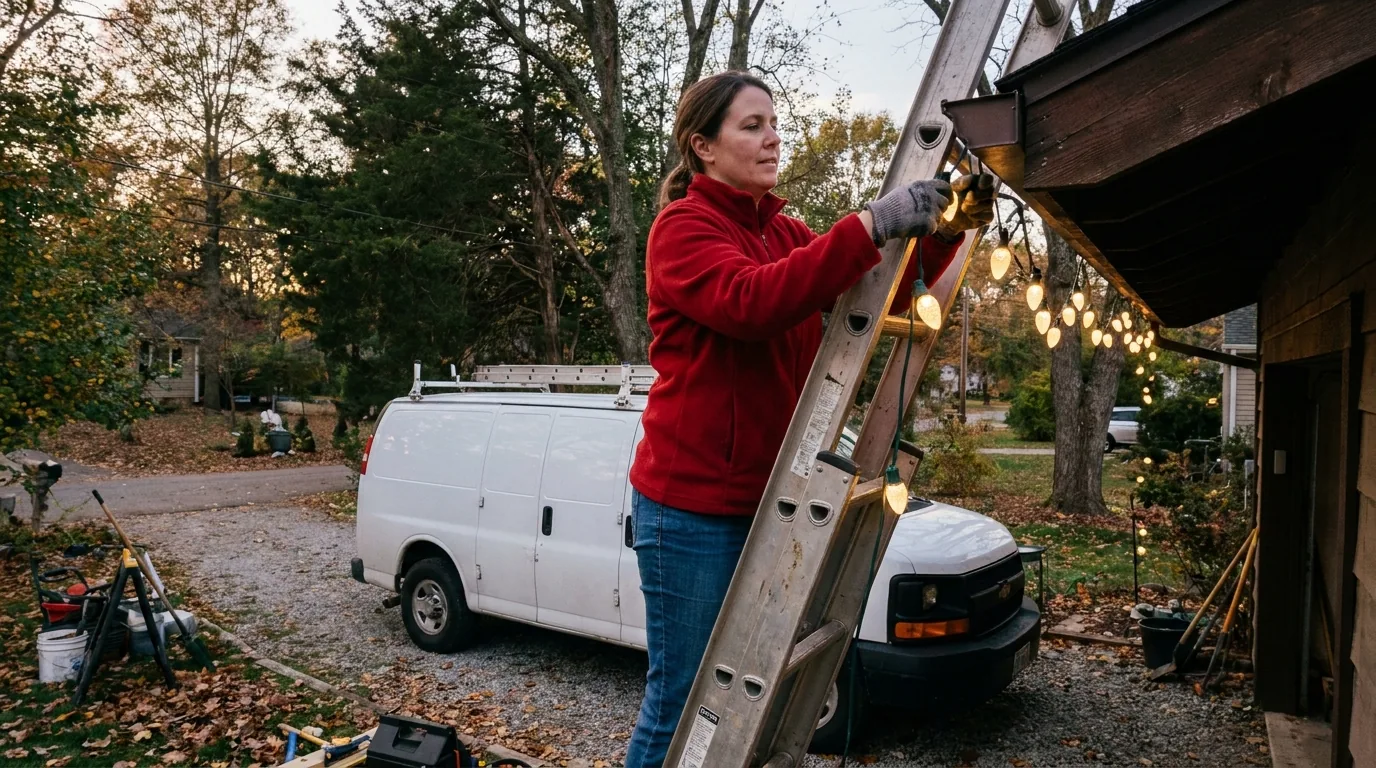
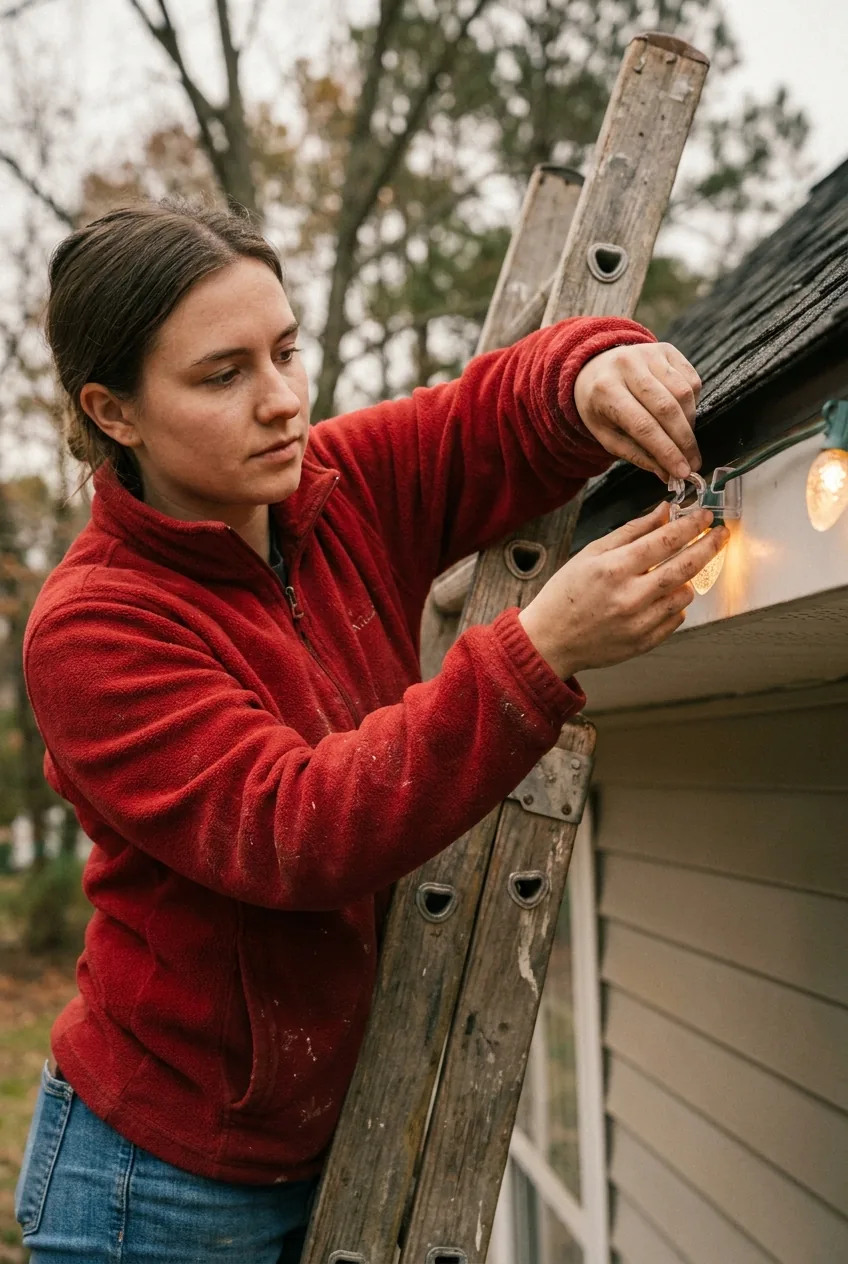
Send a $1,485 install and take-down quote in two taps. Run a 6-stop Saturday install route through 38° rain. Auto-renew 70% of last year's customers before October.
$1 for 14 days, then $19/mo. Card required. Cancel any time.
$79/mo vs $99–$299 industry standard·20-min migration from HCP, Jobber, ServiceTitan·No per-seat fees, ever
Features Christmas lighting shops actually use
Built for Christmas Lighting Companies
The 5 things that decide whether you have an 8-week season worth running or a 4-week scramble. You need auto-renew last year's customers in October. You need on-site quotes with included take-down and storage. You need install and take-down crew dispatch. You need real margin per house based on rope feet and clip count plus 2-story upcharge. You need a customer portal with prior-year photos. All in one app. Built by people who've hung 1,200 feet of warm white LED on a Cleveland Tudor in 28° rain on November 22nd.
October Auto-Renewal of Last Year's Customers*
October 1: every prior-year customer gets an automatic email with last year's design and price and the renewal button. Last year's $1,485 install renews at $1,485 (or $1,540 if you bumped 4%). 70% of your prior customers renew before October 31. Your November is already 70% booked before the busy season starts.
On-Site Quotes Including Take-Down*
Walk the property. Photograph rooflines, eaves, walkways, trees. Build the all-in quote in 6 minutes. Install $1,150 plus take-down $185 plus storage $150 equals $1,485. Everything is included. Customer signs digitally and pays a 30% deposit before you back out of the driveway.
Install and Take-Down Crew Dispatch*
The dispatch board assigns the install crew and truck and ladder rack for November-December. The take-down board auto-creates for the same property in early January. Same crew if available. Same truck. The customer doesn't have to call to schedule the take-down. It is already on January 6th's calendar.
Real Margin Per House*
Rope feet, clip count, 2-story or 3-story upcharge, install hours, take-down hours. Track these per house. Your $1,485 single-story Tudor shows 51% margin with 4 hours install and 1.5 hours take-down. Your $2,800 2-story Victorian shows 38% because the second-story dormers added 90 minutes per side.
Customer Portal with Prior-Year Photos*
Every install has photos saved to the customer record. Next October's renewal email includes last year's photo and the option to upgrade. Add roofline and downspouts and the magnolia tree for $385 more. 15-25% of customers upgrade because they see the photo and remember they wanted more.
* Included on Crew at $39 a month or Business at $79 a month. Starter ($19/mo) covers unlimited jobs, quotes, invoices, Stripe payments, customer portal, online booking, recurring billing, and CSV export. Step up to Crew for texting, AI, and dispatch.
Why Christmas lighting shops switch
Why Christmas Lighting Companies Choose Claver
An 8-Week Season
Christmas lighting is an 8-week season with a 12-month sales cycle if you run it right. The shops that win three things differently. They auto-renew last year's customers in October so the November rush starts with 70% of capacity already booked. They include take-down and storage in the install price so the customer doesn't have to think about it twice. They document every install with photos so next year's renewal is one click instead of a 30-minute phone call.
The shops that don't auto-renew lose 30-40% of last year's customers between January and the following October. The customer takes the lights down and packs them away and forgets. By October your competitor's marketing campaign has converted her. Claver's October auto-renewal holds the customer through 9 months of off-season. By November 1 your dispatch board is 70% pre-booked.
The October auto-renewal is the engine. Take-down and storage included is what locks the relationship.
When the customer signs up for the install at $1,485 in November you set the relationship up for next year too. The package includes install ($1,150) and take-down ($185) and storage ($150). The take-down auto-schedules for the first week of January. The storage of her custom-cut rope and clips lives in your warehouse from January through November. Next October 1 she gets an automatic email. Your custom Christmas lighting from last year is ready for installation. Same design, same crew, same price ($1,485) or upgrade to add the magnolia tree for $385 more. Click to renew. One click and deposit captured. Your November-December calendar fills before the busy season starts.
On-Site Quoting in November
On-site quoting is what closes the new-customer in November. Walk the property with the homeowner. Photograph the roofline, the eaves, the walkway, the trees. Build the all-in quote in 6 minutes. 240 feet warm-white LED on the roofline and downspout wraps plus 2 magnolia trees plus 1 columnar evergreen by the front door plus 18 stake lights along the walkway equals install $1,150 plus take-down $185 plus storage $150 equals $1,485 all-in. The customer sees one price for the whole experience. She signs digitally. She pays a 30% deposit. The job is on Saturday's install route. You stop losing the November lead because she's getting three more bids.
Install and take-down dispatch is what makes the seasonal complexity manageable. The November-December dispatch board assigns the install crew of 3 people. It assigns the truck with the ladder rack and the 32-footer. It assigns the materials with rope feet allocated from inventory. When the install completes Claver auto-creates the take-down job on the customer's preferred January week. Same crew if available. Same truck. The customer doesn't have to call to schedule. The take-down is already on January 6th's calendar at 9am. The storage drop is scheduled for that afternoon.
Job Costing Per House
Job costing tells you which houses pay and which ones eat your November weekends. Your $1,485 single-story Tudor shows 51% margin with 4 hours install and 1.5 hours take-down and 240 feet of rope and 280 clips. Your $2,800 2-story Victorian shows 38% because the second-story dormers added 90 minutes per side and the steep slate roof needed safety harnesses. Your $895 single-tree-only job shows 22% because the drive across town ate 90 minutes for a 25-minute install. Now you know which to keep. You know which to bump 8% in October. You know which single-tree jobs to politely refuse next season.
And the customer portal closes the loop with the photo that drives next year's upgrade. Every install has photos saved to the customer record. Front elevation at twilight. Walkway lights from the driveway. Magnolia tree close-up. Next October's auto-renewal email includes last year's photo and an upgrade option. Last year's design renews at $1,485. Add the back-yard pergola for $325 more. Add the second magnolia tree on the side yard for $245 more. Click to lock in this year. 15-25% of renewals upgrade because seeing the photo reminds them what they wanted to add. Your average ticket goes up 11% year-over-year without selling anything.
Cancel anytime. 20-minute migration from your current tool.
Pricing
Pricing That Works for Christmas Lighting Shops
$19/mo to start. $39/mo for growing teams. $79/mo for the full toolkit. AI summaries, app phone line, October auto-renewal, install and take-down dispatch, real-time job costing, and customer portal with prior-year photos. Same plans as every Claver page. No Christmas lighting upsell.
Simple pricing, no free tier
Every plan includes unlimited jobs, quotes, invoices and Stripe payments. Texting and AI start on Crew. The phone system and full back office are on Business.
$1 for your first 14 days on Starter · Cancel anytime · Your data exports in CSV
Common questions
Common Christmas lighting software questions
No marketing dance. The questions Christmas lighting owners actually ask before they sign up.
Does Claver auto-renew last year's customers in October?+
Yes. October 1: every prior-year customer gets an automatic email with last year's photo, design, and price and the renewal button. Most Claver Christmas lighting shops report 70% of prior customers renew before October 31. Your November is already 70% booked before the busy season starts, and your competitors are still mailing flyers in late October.
Does it include take-down and storage in the install workflow?+
Yes. The all-in quote includes install and take-down and storage in one price. The take-down job auto-creates on the customer's preferred January week (typically Jan 4-12). Same crew if available. Same truck. The customer doesn't have to call to schedule the take-down, it's already on January 6th's calendar at 9am, with the storage drop that afternoon. Storage of her custom-cut rope and clips lives in your warehouse from January through November.
Can I import customers from JobNimbus, Service Autopilot, or Jobber?+
Yes. Export your customer list as CSV from your current tool. JobNimbus, Service Autopilot, Jobber, ServiceTitan, and upload it to Claver. The wizard maps the columns. Most Christmas lighting shops finish the migration in 20-30 minutes (best done August-September during prep season). We'll personally help if anything looks off, email [email protected].
Does it track real margin per house including 2-story upcharge?+
Yes. Rope feet, clip count, 2-story or 3-story upcharge, install hours, take-down hours, drive time, tracked per house. Your $1,485 single-story Tudor shows 51% margin. Your $2,800 2-story Victorian shows 38% because the dormers added 90 minutes per side. Your $895 single-tree-only across town shows 22% because the drive ate 90 minutes for a 25-minute install. Now you know which houses to keep, which to bump 8% in October, and which to politely refuse next season.
What does Claver cost for a Christmas lighting shop?+
$19/mo for Starter (2 users). $39/mo for Crew (8 users) when you want texting, AI, and the dispatch board. $79/mo for Business with the full toolkit, auto-renewal, install and take-down dispatch, real-time job costing, customer portal with prior-year photos, ad-conversion tracking. No contract. Cancel anytime.
Your current software owns your customer list. We don't want to.
Your data exports as CSV the day you leave — your full customer list, every job, every invoice. Your payments go directly through your own Stripe, never ours. Claver starts at $19/mo flat, no contract, no per-seat fees.
Start your $1 trial
14 days for $1, then $19/mo. Cancel any time from settings.