Your Recurring Walk Route Is a $75k Revenue Engine. Stop Running It on Paper.
Daily auto-bill that Stripe runs every Friday night. GPS proof-of-walk so the customer never texts "did you come today?" Per-dog lockbox codes, leash notes, and cancel policy built in. Free to start. $19/mo when you grow.
$1 for 14 days, then $19/mo. Card required. Cancel any time.
$79/mo vs $99–$299 industry standard·20-min migration from Time To Pet, Jobber, ServiceTitan·No per-seat fees, ever
Features dog walking shops actually use
What Your Route Needs. Nothing Your Route Doesn't.
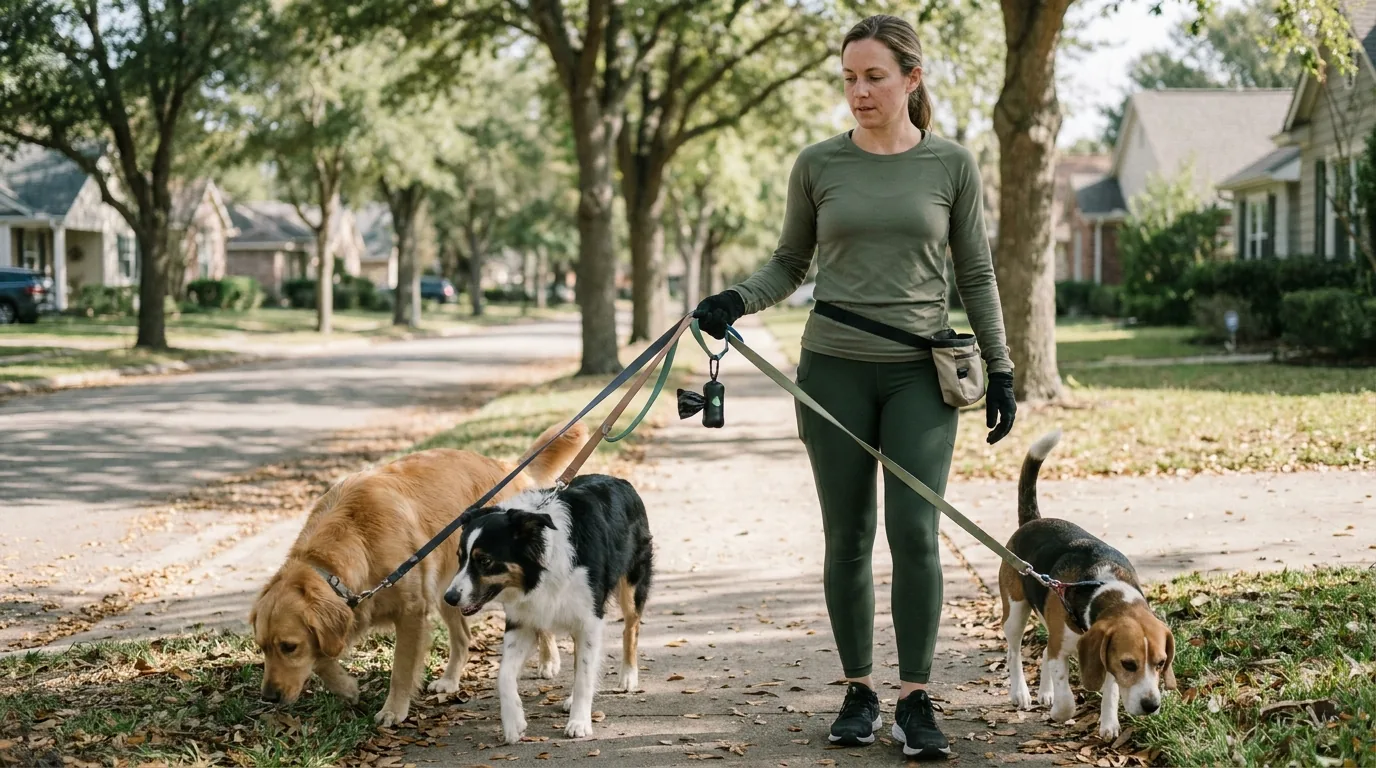
The core of a profitable dog walking business is dead simple: a dense daily route, billing that runs itself, and proof of walk the customer can see on her phone at the office. Claver handles all of it. Built by people who've held three leashes on a Brooklyn sidewalk in July.
Daily Recurring Auto-Bill*
One signup. Every Friday night, Stripe pulls the week's walks automatically. The customer never sees an invoice, never has to remember to pay, never disputes a charge she forgot she authorized. Your job is to show up. The billing runs itself.
Route Density Dispatch*
The board groups walks by neighborhood, calculates drive time and walk duration, and fits the day. Same walker, same hours. The difference is how many blocks she wastes between stops. Tight routes mean more walks per day and less van time eating your margin.
GPS Proof-of-Walk*
Walker taps Start Walk. GPS records the route, distance, and duration. She snaps a photo mid-walk. Taps End Walk. The map and photo land in the customer portal automatically. No more "did you actually go?" texts at 2pm. The GPS map is your answer before she asks.
Per-Dog Records*
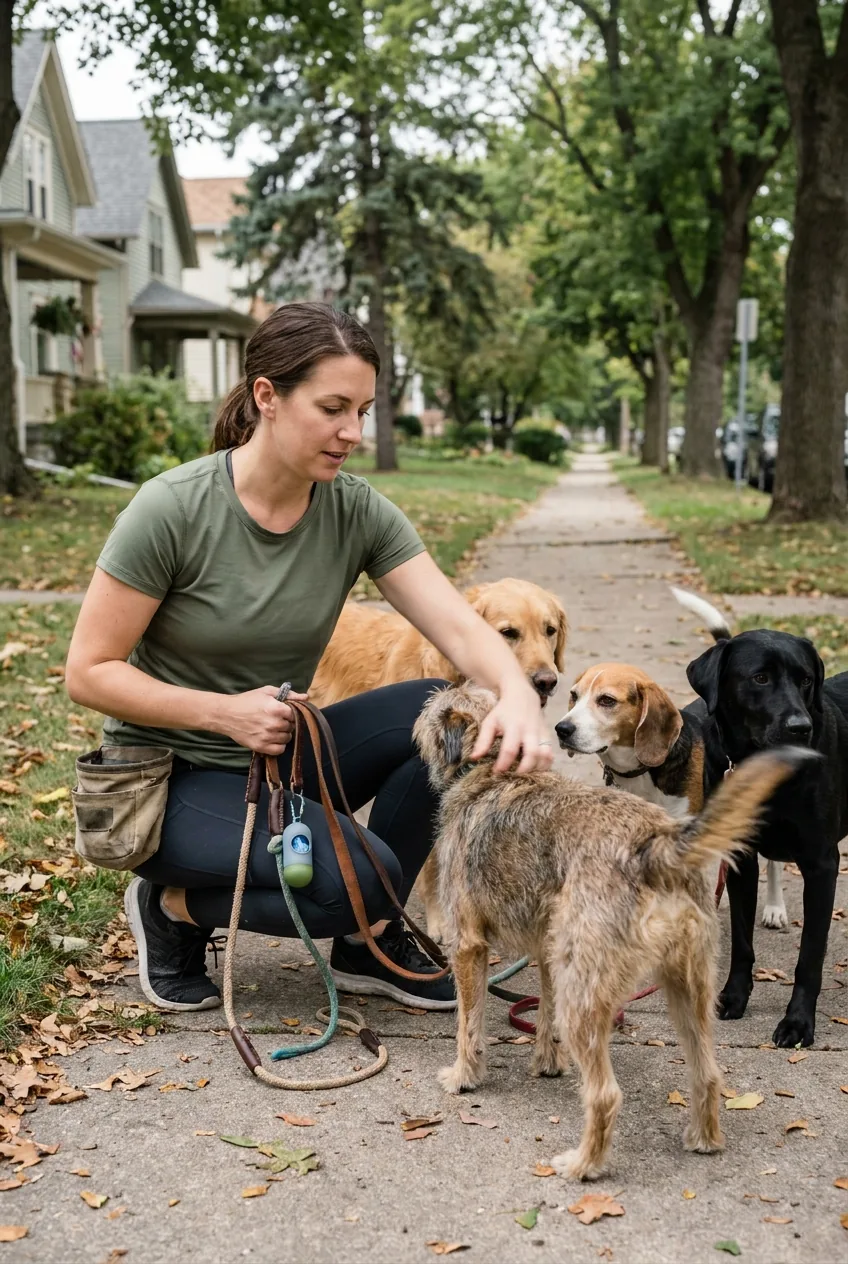
Lockbox combo, gate code, harness type, treat brand, behavioral flags, off-leash waiver status, route preferences. All stored on the dog profile. When a walker calls out sick and you send a substitute, the sub walks in knowing exactly how to handle the dog. The customer never knows the difference.
Online Booking Widget*
New customer finds you at 11pm on a Sunday. She books, picks her schedule, pays the deposit. The recurring walk series auto-creates on Tuesday's dispatch board. You wake up to a confirmed client. No phone tag, no back-and-forth on rate sheets.
* Included on Crew at $39 a month or Business at $79 a month. Starter ($19/mo) covers unlimited jobs, quotes, invoices, Stripe payments, customer portal, online booking, recurring billing, and CSV export. Step up to Crew for texting, AI, and dispatch.
Why dog walking shops switch
The Business Hiding Inside Your Walk Route
Not a $25-Per-Walk Customer
A dog walking client who stays two years is not a $25-per-walk customer. She's a $6,500 annual client on auto-pay who texts her friends when her dog comes home tired and happy. Get that relationship right in year one and you keep it until the dog retires. Get one walk wrong without GPS proof, and she's on Rover by Tuesday.
The shops that hold clients for years do two things the others don't. They make the billing invisible, so the customer never has to think about paying. And they send photo proof after every single walk, so trust builds quietly in the background instead of requiring a phone call to maintain.
Recurring billing is the revenue engine. GPS proof-of-walk is what keeps the engine running for five years.
New Puppy, Sunday Night
When someone brings home a new puppy on a Friday and realizes Sunday night she can't leave him alone for nine hours starting Monday, she's not calling anyone. She's Googling at 11pm. If your site says "call us Monday," half those leads sign up on Wag before breakfast. Claver's booking widget captures her: she picks her schedule, sees the per-pet pricing, pays a deposit, and the first walk lands on your dispatch board. No phone tag required.
Once she's in, the recurring billing does its job quietly. Stripe pulls the week's walks every Friday night. She never receives an invoice. She never has to log in and pay. Her card on file handles it, and your bank account reflects it Saturday morning. Multiply that by a full route and you have predictable weekly revenue that compounds without you chasing it.
Route Density and Labor Cost
Route density is where your labor costs either work for you or against you. The difference between six walks and ten on a Tuesday isn't more hours. It's the dead time between stops. Claver groups walks by zip code and calculates the actual drive-and-walk sequence, so you stop sending a walker from Park Slope to Carroll Gardens and back when three more dogs sit two blocks apart on the same street.
Per-dog records are what make the business survive its own growth. Every dog has a profile: leash setup, treat preferences, behavioral notes, off-leash liability waiver status, lockbox combination, gate code, water bowl instructions. When you hire a second walker or cover a sick-day route yourself, nobody has to call the client for a five-minute orientation. The profile has it. The 30-minute walk stays 30 minutes. The client doesn't notice the substitution. That's the difference between a business and a job.
Cancel anytime. 20-minute migration from your current tool.
Pricing
Pricing That Works for Dog Walking Shops
$19/mo to start. $39/mo for growing teams. $79/mo for the full toolkit, daily recurring billing, route optimization, GPS walk tracking, per-dog records, and ad-conversion tracking. Same plans across every Claver page. No dog-walking surcharge.
Simple pricing, no free tier
Every plan includes unlimited jobs, quotes, invoices and Stripe payments. Texting and AI start on Crew. The phone system and full back office are on Business.
$1 for your first 14 days on Starter · Cancel anytime · Your data exports in CSV
Common questions
What dog walking owners ask before they sign up
No marketing spin. Straight answers to the questions that actually matter when you're running a walk route and considering a switch.
Does Claver handle daily recurring auto-billing?+
Yes. The customer signs up once for their Mon-Fri schedule. Stripe pulls the card every Friday night for that week's walks. The recurring schedule auto-renews. The customer never sees an invoice, and you never have to chase a payment. Scale that across a full route and you have predictable recurring revenue that Wag and Rover will never offer you.
Does it track GPS walks and send photos to the customer?+
Yes. Walker taps "Start Walk." GPS records the route, distance, duration, and pace. She snaps a photo of the dog mid-walk. Taps "End Walk." The GPS map and photo save to the customer record and appear in the customer portal within seconds. The client at her office desk sees the walk map and a photo without sending a single text. That's the trust loop that keeps clients for years.
Does it save per-dog records such as leash setup, lockbox code, and behavioral notes?+
Yes. Each dog has a profile: breed, weight, leash setup (harness vs. collar, which ring it clips to), treat preferences and restrictions, behavioral notes, off-leash waiver status, route preferences, gate code, lockbox combination, water bowl instructions. When your regular walker calls out sick and you send a substitute, the sub reads the profile and walks in already knowing the dog. No client call. No discovery walk. The 30-minute walk is 30 minutes.
Can I import customers from Time To Pet, Pet Sitter Plus, or Jobber?+
Yes. Export your customer list as CSV from your current tool, Time To Pet, Pet Sitter Plus, Jobber, ServiceTitan, and upload it to Claver. The wizard maps the columns. Most dog walking shops finish the migration in 20-30 minutes. We'll personally help if anything looks off. Email [email protected].
What does Claver cost for a dog walking shop?+
$19/mo for Starter (2 users). $39/mo for Crew (8 users) when you want texting, AI, and the dispatch board. $79/mo for Business with the full toolkit, daily recurring billing, route optimization, GPS walk tracking and photos, per-dog records, ad-conversion tracking. No contract. Cancel anytime.
Your current software owns your customer list. We don't want to.
Your data exports as CSV the day you leave — your full customer list, every job, every invoice. Your payments go directly through your own Stripe, never ours. Claver starts at $19/mo flat, no contract, no per-seat fees.
Start your $1 trial
14 days for $1, then $19/mo. Cancel any time from settings.