Send a $385 multi-patch quote with texture match (orange peel, knockdown, smooth) on the customer's wall. Run a 6-stop Tuesday route without a clipboard. Track which Charlotte ZIP code pays the popcorn-ceiling-removal premium.
$1 for 14 days, then $19/mo. Card required. Cancel any time.
$79/mo vs $99–$299 industry standard·20-min migration from HCP, Jobber, ServiceTitan·No per-seat fees, ever
Features drywall shops actually use
Built for Drywall Repair Companies
The 5 things that decide whether you book the multi-patch repair or watch it go to the next handyman, on-site quotes with patch count and texture match and paint touch-up, route density that fits 6 stops a Tuesday with proper dry-time between coats, photo records of pre-existing damage and final, real margin per patch (mud and tape and paint and return-trip economics), and per-customer history (the apartment-turnover account who calls every move-out). All in one app. Built by people who've matched a 1985 Charlotte popcorn ceiling texture pattern by hand.
On-Site Quotes with Texture Match
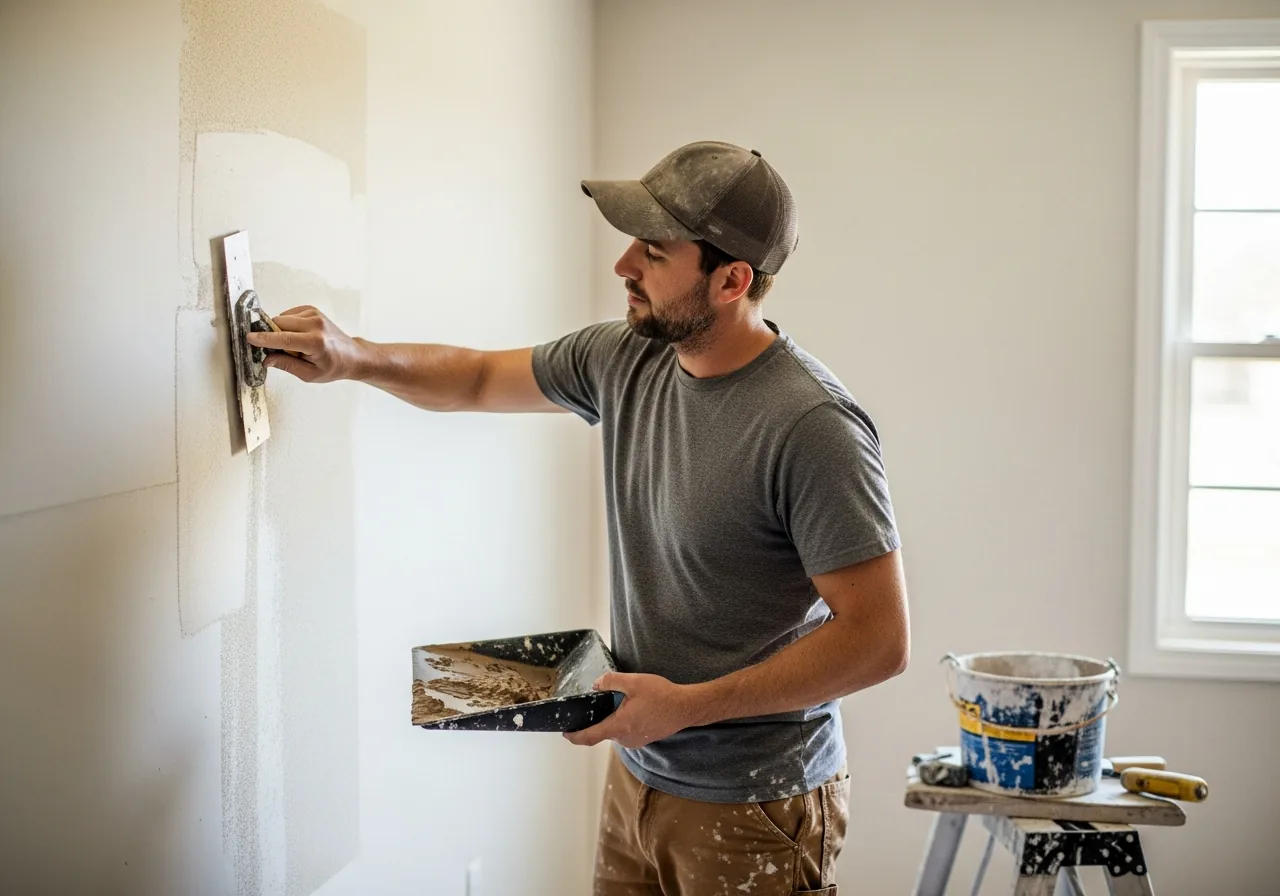
Walk the home. Photograph each patch (doorknob hole, water damage stain, nail pops, hairline crack along ceiling-wall corner). Identify texture (orange peel medium, knockdown heavy, smooth Level 5, popcorn). Build the quote in 5 minutes, 4 patches and texture match and paint touch-up = $385 with 2-visit timeline (mud Day 1, return for finish and paint Day 3). Customer signs digitally and pays a 25% deposit before you back out of the driveway.
Route Density for Multi-Coat Workflow
The dispatch board groups stops by zip code AND by visit number (visit 1: tape and mud, visit 2: sand and finish coat, visit 3: paint touch-up). Your Tuesday: 6 visit-1 jobs in Dilworth. Thursday: 6 visit-2 returns to the same Dilworth jobs. Saturday: 6 visit-3 paint touch-ups. Same crew. Same fuel. Three full days of revenue from one neighborhood.
Photo Records of Pre and Final
Pre-job: every patch photographed with measurement (4x6 doorknob hole, 14x22 water-damage drywall replacement, hairline crack at ceiling line). During: tape and mud applied. Post-paint: completed patch with texture match and paint touch-up. The customer signs off on the photos. The Year-2 callback about "the patch is showing" closes in your favor because the photos prove the texture matched at install.
Real Margin Per Patch
Mud (joint compound), tape, paint quart, labor hours per visit, drive time, tracked per job. Your $385 4-patch repair shows 51% margin (3 visits, 1.5 total hours work, minimal materials). Your $185 single doorknob hole shows 71% (1.5 visits, in-and-out). Your $1,800 popcorn-ceiling removal in a 320-sqft bedroom shows 28% because the texture removal took 6 hours and the dust containment ate 2 hours of prep and cleanup.
Per-Customer Apartment Turnover History
Per-customer service history saves the recurring B2B accounts: apartment property managers (8-12 turnover patches per month per building), house-flipper LLCs (4-6 patches per pre-listing inspection), insurance restoration partners (2-4 water-damage patches per claim). Your $5,000+/mo apartment turnover contracts auto-renew because the property manager sees consistent texture matches and 24-hour turn times.
* Included on Crew at $39 a month or Business at $79 a month. Starter ($19/mo) covers unlimited jobs, quotes, invoices, Stripe payments, customer portal, online booking, recurring billing, and CSV export. Step up to Crew for texting, AI, and dispatch.
Why drywall shops switch
Why Drywall Repair Companies Choose Claver
Multi-Visit, Multi-Coat Route Economics
Drywall repair is a multi-visit, multi-coat business with brutal route economics. Each patch needs 3 visits (tape and mud, sand and finish, paint touch-up) with 24-48 hour cure between coats. The shops that win are the ones who batch all visit-1 jobs in one neighborhood Tuesday, all visit-2 returns Thursday, all visit-3 paints Saturday, instead of driving across town three separate times for one $185 patch.
The shops that lose are still doing the 2010 playbook: book the patch, drive 22 miles, mud, drive back 3 days later for finish, drive back another 3 days for paint. Three full visits across the city for $185, your hourly rate is $24/hour after gas.
Multi-coat route density is the engine. Texture-match documentation is what protects the warranty.
When you walk Mrs. Castillo's Dilworth bungalow on a Saturday morning, the quote builds itself in the app. Photograph each patch (4-inch doorknob hole behind the dining room door, 14x22-inch water-damage drywall replacement on the den ceiling from a Year-1 roof leak that's been fixed, 6 nail pops on the master bedroom wall, hairline crack along the ceiling-wall corner in the foyer). Identify the existing texture: orange peel medium on the walls (post-1990s build), smooth Level 5 on the ceiling (likely 2018 popcorn removal). Match the wall paint (Sherwin-Williams Sea Salt SW 6204, owner has a partial gallon in the garage we can use for touch-up). Build the quote: $385 (4 patches and texture match and paint touch-up + 3 visits. Day 1 tape and mud, Day 3 sand and finish coat, Day 5 paint touch-up). Customer signs digitally, pays a $96 deposit. Day 1 visit on Tuesday morning.
Multi-Coat Route Density
Multi-coat route density is what turns a 3-stop Tuesday into a 6-stop Tuesday with two more 6-stop days that week. Tuesday: 6 visit-1 jobs in Dilworth and Plaza Midwood (tape and mud all 6 patches). Thursday: 6 visit-2 returns to the same 6 jobs (sand and finish coat). Saturday: 6 visit-3 returns (paint touch-up and final walk-through). Claver groups jobs by zip code AND by visit number, calculates drive time and per-visit duration, and fits the day. Same crew. Same fuel cost. Three full days of revenue from one neighborhood instead of one $385 day with two return trips eating your margin.
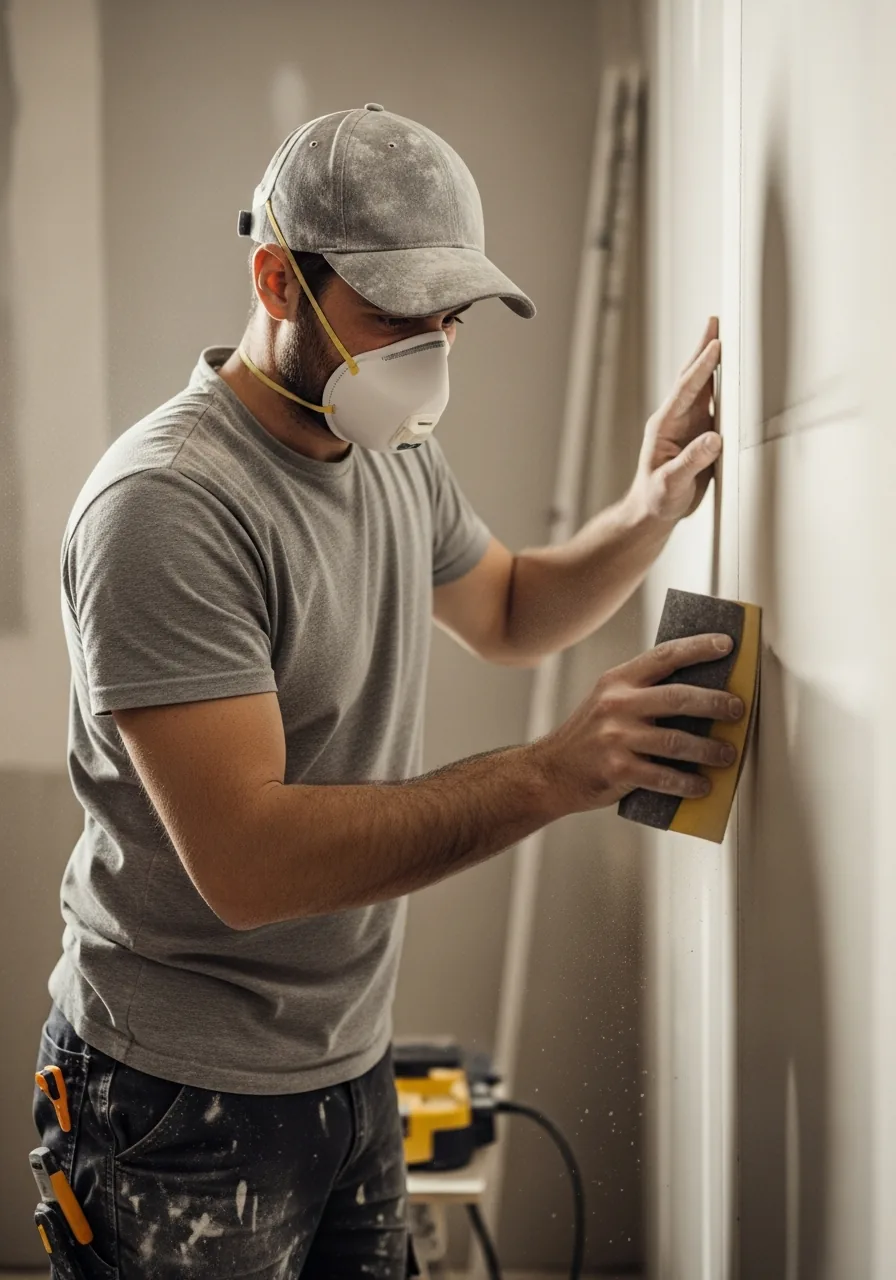
Photo documentation is what protects the warranty and the customer's trust. Claver structures every patch around timestamped photos: pre-job photos of every damage point with measurement (4x6 doorknob hole, 14x22 water-damage replacement, hairline crack at corner). During: tape applied (mesh tape on the doorknob hole, paper tape on the corner crack), first mud coat applied (60-grit sandable). Day 3 visit: sanded smooth, finish coat applied (90-grit feathered out 12 inches beyond the patch edge). Day 5 visit: paint touch-up applied with the matched paint color, final walk-through photo of the patch invisible at 3 feet. The customer signs off in her portal. Year 2 she calls about "the patch is showing". You pull up the install photos showing the texture matched at install and the final walk-through invisibility test. The patch is showing because she had a roof leak again, not because of the original repair.
Apartment Turnover History Per Customer
Per-customer apartment turnover history is what holds the recurring B2B revenue. The 240-unit apartment building turnover account: 8-12 patches per month per building (doorknob holes, nail pops, kitchen cabinet damage from the move-out, bathroom drywall water damage from the broken caulk, the standard wear-and-tear pre-leasing patches). Property manager calls Friday afternoon with 7 units to turn for next week's tenants. Claver pulls the building history (typical 8-12 patches per turn, average $145 per unit, paint colors per unit type, the building's standard texture pattern). Your tech walks in already knowing the building. That's $5,000+/mo of recurring B2B revenue from 3 apartment management contracts that auto-call when units turn.
And here's where most drywall shops fly blind: marketing spend. You're paying $20-$45 per click on Google Ads for keywords like "drywall repair [city]" and "hole in wall repair." Some clicks become $1,800 popcorn-ceiling removals. Some become nothing. Claver captures the Google click ID when someone visits your site and tracks it through quote → completed repair → final payment. "Drywall repair Charlotte" generated 18 clicks, 12 quotes, 7 completed jobs worth $4,200. "Drywall contractor near me" generated 78 clicks, 2 quotes, $570. Triple the first campaign. Cut the second.
Cancel anytime. 20-minute migration from your current tool.
Pricing
Pricing That Works for Drywall Shops
$19/mo to start. $39/mo for growing teams. $79/mo for the full toolkit. AI summaries, app phone line, on-site quoting, multi-coat route dispatch, photo and texture documentation, per-customer apartment turnover history, ad-conversion tracking. Same plans as every Claver page, no drywall upsell.
Simple pricing, no free tier
Every plan includes unlimited jobs, quotes, invoices and Stripe payments. Texting and AI start on Crew. The phone system and full back office are on Business.
$1 for your first 14 days on Starter · Cancel anytime · Your data exports in CSV
Common questions
Common drywall repair software questions
No marketing dance. The questions drywall repair owners actually ask before they sign up.
Does Claver build on-site quotes with texture match?+
Yes. Walk the home, photograph each patch with measurement (4x6 doorknob hole, 14x22 water-damage replacement, hairline crack at ceiling corner). Identify the existing texture (orange peel medium, knockdown heavy, smooth Level 5, popcorn 1980s pattern). Match the paint color from the customer's existing partial gallon. Build the quote in 5 minutes, 4 patches and texture match and paint touch-up = $385 with 3-visit timeline (Day 1 tape and mud, Day 3 sand and finish, Day 5 paint touch-up). Customer signs digitally and pays a 25% deposit through Stripe before you back out of the driveway.
Does it dispatch multi-coat workflow across the week?+
Yes. Claver groups jobs by zip code AND by visit number. Tuesday: 6 visit-1 jobs in Dilworth and Plaza Midwood (tape and first mud coat). Thursday: 6 visit-2 returns to the same 6 jobs (sand and finish coat). Saturday: 6 visit-3 returns (paint touch-up and final walk-through). Same crew. Same fuel cost. Three full days of revenue from one neighborhood instead of one $385 day with two return trips eating your margin.
Does it handle apartment turnover recurring B2B contracts?+
Yes. Per-customer service history saves the recurring B2B accounts: apartment property managers (8-12 turnover patches per month per building), house-flipper LLCs (4-6 patches per pre-listing inspection), insurance restoration partners (2-4 water-damage patches per claim). Property manager calls with 7 units to turn for next week's tenants. Claver pulls the building history. Your tech walks in already knowing the typical patches, paint colors, and texture pattern. That's $5,000+/mo of recurring B2B revenue from 3 apartment management contracts.
Can I import customers from Jobber, ServiceTitan, or Housecall Pro?+
Yes. Export your customer list as CSV from your current tool. Jobber, ServiceTitan, Housecall Pro, FieldEdge, and upload it to Claver. The wizard maps the columns. Most drywall shops finish the migration in 20-30 minutes. We'll personally help if anything looks off, email [email protected].
What does Claver cost for a drywall shop?+
$19/mo for Starter (2 users). $39/mo for Crew (8 users) when you want texting, AI, and the dispatch board. $79/mo for Business with the full toolkit, on-site quoting with texture match, multi-coat route dispatch, photo and texture documentation, per-customer apartment turnover history, ad-conversion tracking. No contract. Cancel anytime.
Your current software owns your customer list. We don't want to.
Your data exports as CSV the day you leave — your full customer list, every job, every invoice. Your payments go directly through your own Stripe, never ours. Claver starts at $19/mo flat, no contract, no per-seat fees.
Start your $1 trial
14 days for $1, then $19/mo. Cancel any time from settings.