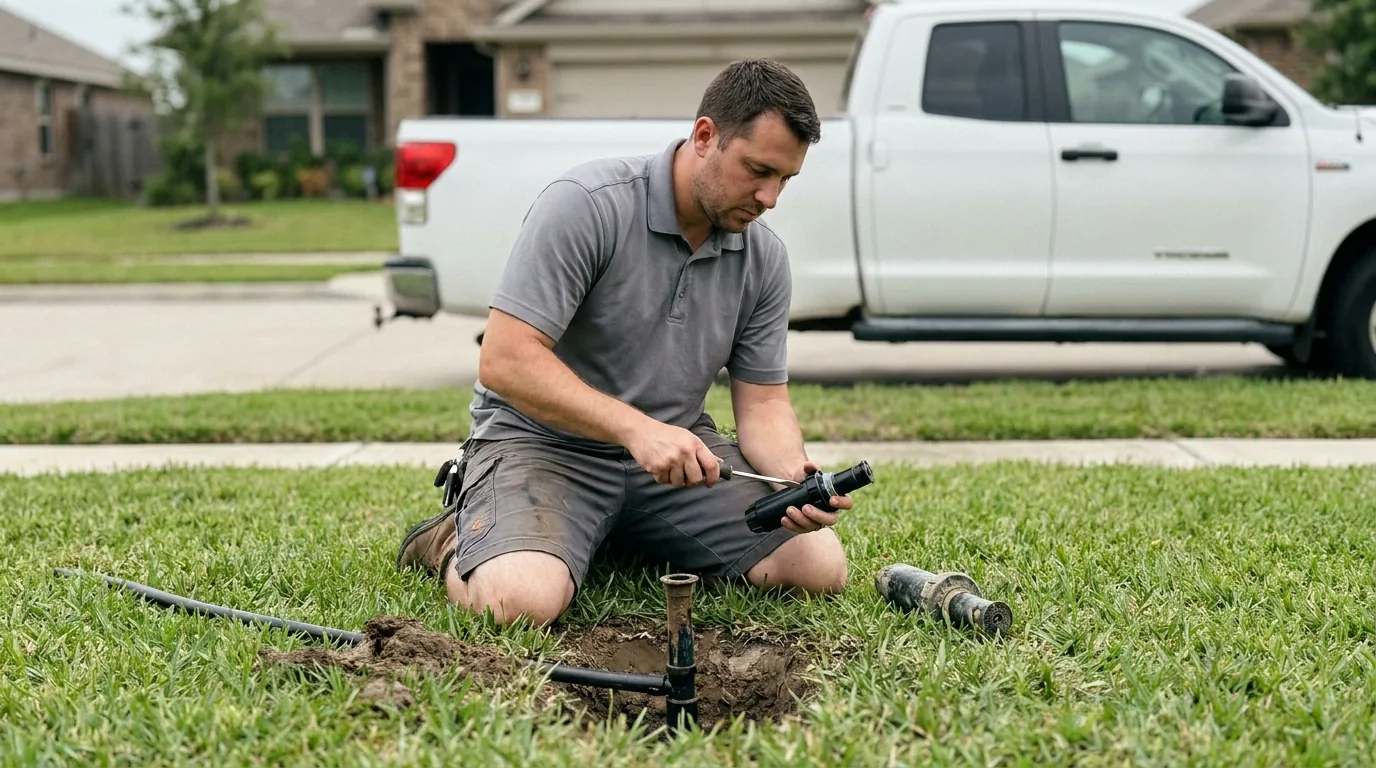
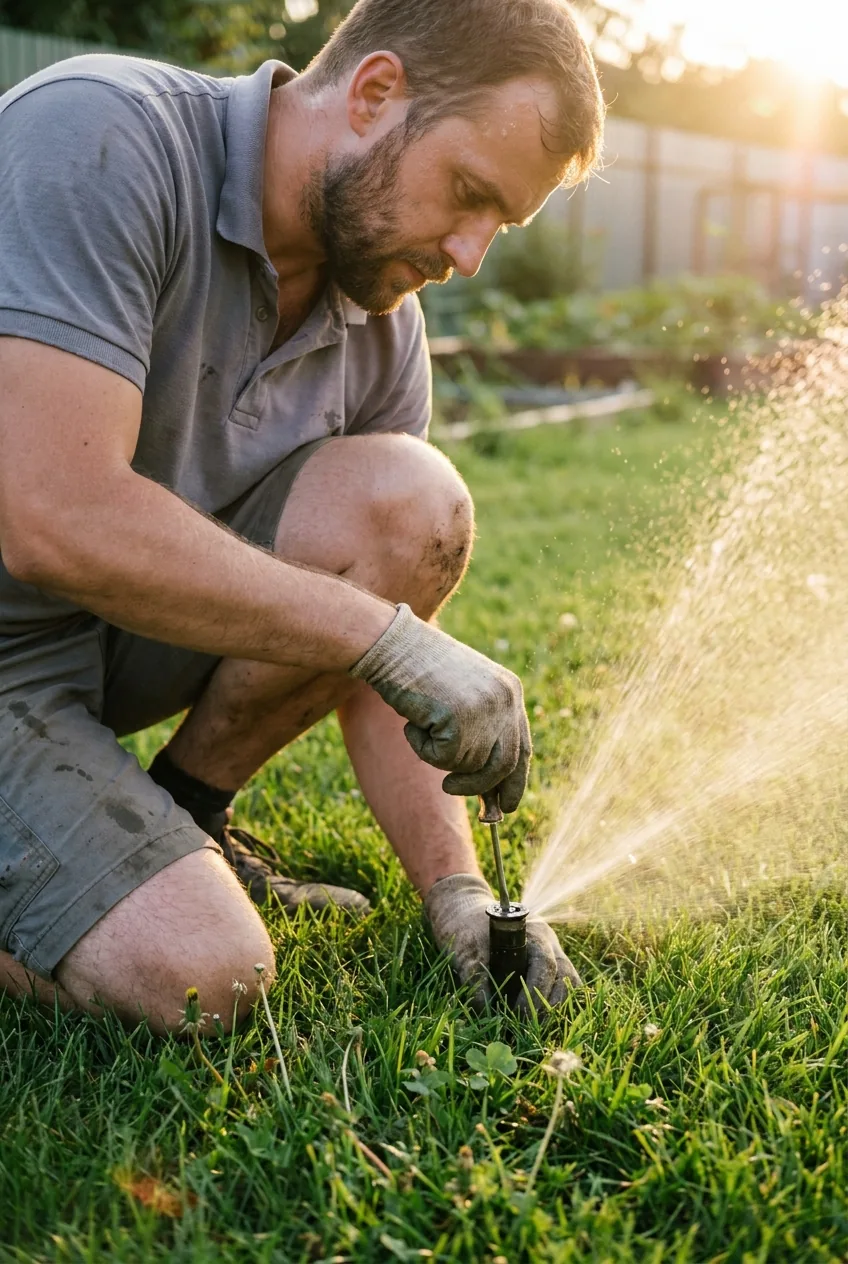
Irrigation Software for Spring Startup and Winter Blow-Outs
Auto-bill spring activation and fall winterize every year. Run a 22-system Tuesday route in March without a clipboard. Track per-zone repair history so the customer's broken Zone 5 head is replaced before she calls.
$1 for 14 days, then $19/mo. Card required. Cancel any time.
$79/mo vs $99–$299 industry standard·20-min migration from HCP, Jobber, ServiceTitan·No per-seat fees, ever
Features irrigation shops actually use
Built for Irrigation & Sprinkler Companies
The 5 things that turn a $185 spring activation into an $1,800 5-year recurring customer, auto-billed spring and fall recurring, route density that fits 22 systems a Tuesday, on-site repair quotes for broken heads and valves, per-zone repair history, and smart-controller install upsell ($385 Rachio and $200 install). All in one app. Built by people who've replaced 6 broken Hunter PGP heads in a Nashville lawn after a winter freeze cracked the manifold.
Spring and Fall Recurring Auto-Bill*
Customer signs up for spring activation ($185) and fall winterize ($145) recurring. Stripe pulls the card on the day of service. $185 + $145 = $330/year per system per address. 22 systems on Tuesday's route is $7,260/year, billed automatically.
Route Density for 22-System Tuesdays*
The dispatch board groups systems by zip code, calculates drive time and average activation time (35 min/system), and fits the day. Your March Tuesday went from 12 activations with cross-Nashville driving to 22 in the same Brentwood / Belle Meade corridor. Same labor. Revenue up 83%.
On-Site Repair Quotes*
Tech finds 6 broken Hunter PGP heads + 1 leaking 1" valve in Mrs. Castillo's system during activation. Builds the repair quote in 4 minutes, 6 PGP heads $145 + 1 valve $185 + 1 hour labor = $385. Customer signs digitally on the iPad. Repair done same visit. $185 activation and $385 repair = $570 total ticket from one stop.
Per-Zone Repair History*
8-zone system: Zone 1 (front lawn rotors, 8 heads, last service March 2024–2 heads replaced). Zone 5 (side yard mist, 4 heads, currently leaking, needs replacement). Zone 8 (drip on flower beds, 3 emitters, last service April 2024). Tech walks in already knowing the system layout, prior repairs, and which zones are due for proactive replacement.
Smart Controller Upsell Workflow*
Existing 1996 Rain Bird ESP-4 controller is failing. Build the upgrade quote on-site. Rachio 8-zone smart controller $385 + install $200 + WiFi setup = $585. Customer sees the water-savings math (15-20% reduction = $14/month off her bill in summer). Signs and pays. Smart controller installed same visit.
* Included on Crew at $39 a month or Business at $79 a month. Starter ($19/mo) covers unlimited jobs, quotes, invoices, Stripe payments, customer portal, online booking, recurring billing, and CSV export. Step up to Crew for texting, AI, and dispatch.
Irrigation is a 6-month season with 12-month recurring revenue if you set it up right. The customer signs up for spring activation in April. By next April she's renewed automatically because the program billed itself. The shops that win run two things differently: they auto-renew spring and fall (so the customer doesn't shop competitors in March), and they catch the broken-head and valve repair work on-site during the activation visit.
The shops that lose are still doing the 2010 playbook: book the spring activation, drive 22 miles, find 6 broken heads, tell the customer she needs to call back to schedule a repair visit. Customer calls a competitor for the repair. You lost the $385 add-on revenue and the customer's trust.
Spring and fall auto-renewal is the engine. On-site repair quoting is the upside.
When the customer signs up for the spring activation and fall winterize program in April at $185 + $145 = $330/year, you set the relationship up for 5+ years. Stripe pulls $185 the day of spring activation (typically late March / early April depending on the zone's last freeze date). Stripe pulls $145 the day of fall winterize (typically late October / early November depending on the first freeze). The next year auto-schedules. The customer gets a 7-day reminder text before each visit. $330/year × 22 customers on Tuesday's route is $7,260/year of recurring revenue, $36,300 over 5 years per route, billed automatically.
Route Density in the Spring Rush
Route density is what turns a 12-system Tuesday into a 22-system Tuesday during the spring rush. Claver groups systems by zip code, calculates drive time and average activation duration (35 minutes for an 8-zone system, 25 minutes for a 4-zone, 60 minutes for a 12-zone), and fits the day. Your March Tuesday: 22 activations grouped in Brentwood and Belle Meade and Forest Hills with 18 minutes total drive time, 8 hours of work, $4,070 revenue. Same tech. Same fuel. Revenue up 83% over the old random route.
On-site repair quoting is what turns the $185 activation into a $570 paid ticket. Tech walks Mrs. Castillo's 8-zone system. Zone 1 (front lawn rotors): 2 of 8 heads broken, replacement needed. Zone 5 (side yard mist heads): 4 of 4 heads cracked at the threads, full replacement. 1" Wilkins backflow valve at the manifold: leaking from the bonnet, replacement needed. Tech builds the repair quote in 4 minutes on his iPad: 6 Hunter PGP rotor heads $145 + 4 mist heads $48 + 1 Wilkins valve $185 + 1.5 hours additional labor = $385 in repairs on top of the $185 activation. Customer sees three professional photos of the failed components, signs digitally, pays $570 through Stripe. The repair is done before the tech leaves the side yard.
Per-Zone History Catches Problems Early
Per-zone history is what catches the developing problem next year before it becomes a repair callback. Mrs. Castillo's 8-zone system at 412 Brookwood: Zone 1 (front lawn rotors, 8 heads, last service March 2024–2 heads replaced, 6 currently OK), Zone 2 (back lawn rotors, 6 heads, all OK March 2024), Zone 3 (side yard rotors, 4 heads, 1 head replaced March 2024), Zone 4 (front bed drip, 12 emitters, all OK), Zone 5 (side mist, 4 heads, all 4 replaced March 2024, within 1-year warranty), Zone 6 (back drip, 18 emitters, 2 replaced 2024), Zone 7 (back mist, 6 heads, all OK), Zone 8 (controller, 1996 Rain Bird ESP-4, intermittent failures noted). Next March activation, your tech pulls up the system and pre-orders 4 PGP heads (Zone 1 is due based on the failure trajectory), the new Rachio smart controller (Zone 8 is failing intermittently per last year's note). The repair conversation is proactive, not reactive.
And smart controller upsells are the high-margin add-on most irrigation shops miss. Mrs. Castillo's 1996 Rain Bird ESP-4 is failing intermittently per your prior-year notes. You build the upgrade quote on-site: Rachio 3 8-zone smart controller $385 + install and WiFi setup $200 + remove old controller and box and cleanup = $585. Customer sees the water-savings math you display in the portal: smart controllers reduce water usage 15-20% by skipping rain days and adjusting for evapotranspiration. Her summer bill drops $14/month. Annual savings = $42 (cooler months) and $84 (4 hot months) = $126/year. Payback in 4.6 years, even faster if she's paying Nashville's tiered water rates. Customer signs. Smart controller installed same visit.
Cancel anytime. 20-minute migration from your current tool.
Pricing
Pricing That Works for Irrigation Shops
$19/mo to start. $39/mo for growing teams. $79/mo for the full toolkit. AI summaries, app phone line, recurring billing, route optimization, on-site repair quotes, per-zone history, smart controller upsell. Same plans as every Claver page, no irrigation upsell.
Simple pricing, no free tier
Every plan includes unlimited jobs, quotes, invoices and Stripe payments. Texting and AI start on Crew. The phone system and full back office are on Business.
$1 for your first 14 days on Starter · Cancel anytime · Your data exports in CSV
Common questions
Common irrigation software questions
No marketing dance. The questions irrigation owners actually ask before they sign up.
Does Claver handle spring and fall recurring auto-billing?+
Yes. Customer signs up for spring activation ($185) and fall winterize ($145) recurring. Stripe pulls the card the day of each service (late March activation, late October winterize, depending on local frost dates). Next year auto-schedules. The customer gets a 7-day reminder text before each visit. $185 + $145 = $330/year per system. 22 systems on Tuesday's route is $7,260/year, $36,300 over 5 years, billed automatically. The customer never has to remember to call.
Does it support on-site repair quotes during activations?+
Yes. Tech walks the system during activation. Identifies broken heads, leaking valves, failing controllers. Builds the repair quote in 4 minutes, 6 Hunter PGP rotor heads $145 + 4 mist heads $48 + 1 Wilkins valve $185 + 1.5 hours additional labor = $385. Customer sees three professional photos of the failed components, signs digitally, pays $570 total ticket through Stripe. The repair is done before the tech leaves the side yard.
Does it save per-zone repair history?+
Yes. 8-zone system at 412 Brookwood: Zone 1 (front lawn rotors, 8 Hunter PGP heads, 2 replaced March 2024), Zone 2 (back lawn, 6 OK), Zone 3 (side yard, 1 replaced 2024), Zone 4 (front bed drip, 12 emitters), Zone 5 (side mist, all 4 replaced 2024, within warranty), Zone 6 (back drip, 18 emitters, 2 replaced), Zone 7 (back mist, all OK), Zone 8 (controller, 1996 Rain Bird ESP-4, intermittent failures). Next March activation, your tech pulls up the system and pre-orders 4 PGP heads and the new Rachio smart controller. The repair conversation is proactive, not reactive.
Can I import customers from Service Autopilot, Jobber, or LMN?+
Yes. Export your customer list as CSV from your current tool. Service Autopilot, Jobber, LMN, ServiceTitan, and upload it to Claver. The wizard maps the columns. Most irrigation shops finish the migration in 20-30 minutes (best done January-February during prep season). We'll personally help if anything looks off, email [email protected].
What does Claver cost for an irrigation shop?+
$19/mo for Starter (2 users). $39/mo for Crew (8 users) when you want texting, AI, and the dispatch board. $79/mo for Business with the full toolkit, recurring billing, route optimization, on-site repair quotes, per-zone repair history, smart controller upsell workflow, ad-conversion tracking. No contract. Cancel anytime.
Your current software owns your customer list. We don't want to.
Your data exports as CSV the day you leave — your full customer list, every job, every invoice. Your payments go directly through your own Stripe, never ours. Claver starts at $19/mo flat, no contract, no per-seat fees.
Start your $1 trial
14 days for $1, then $19/mo. Cancel any time from settings.