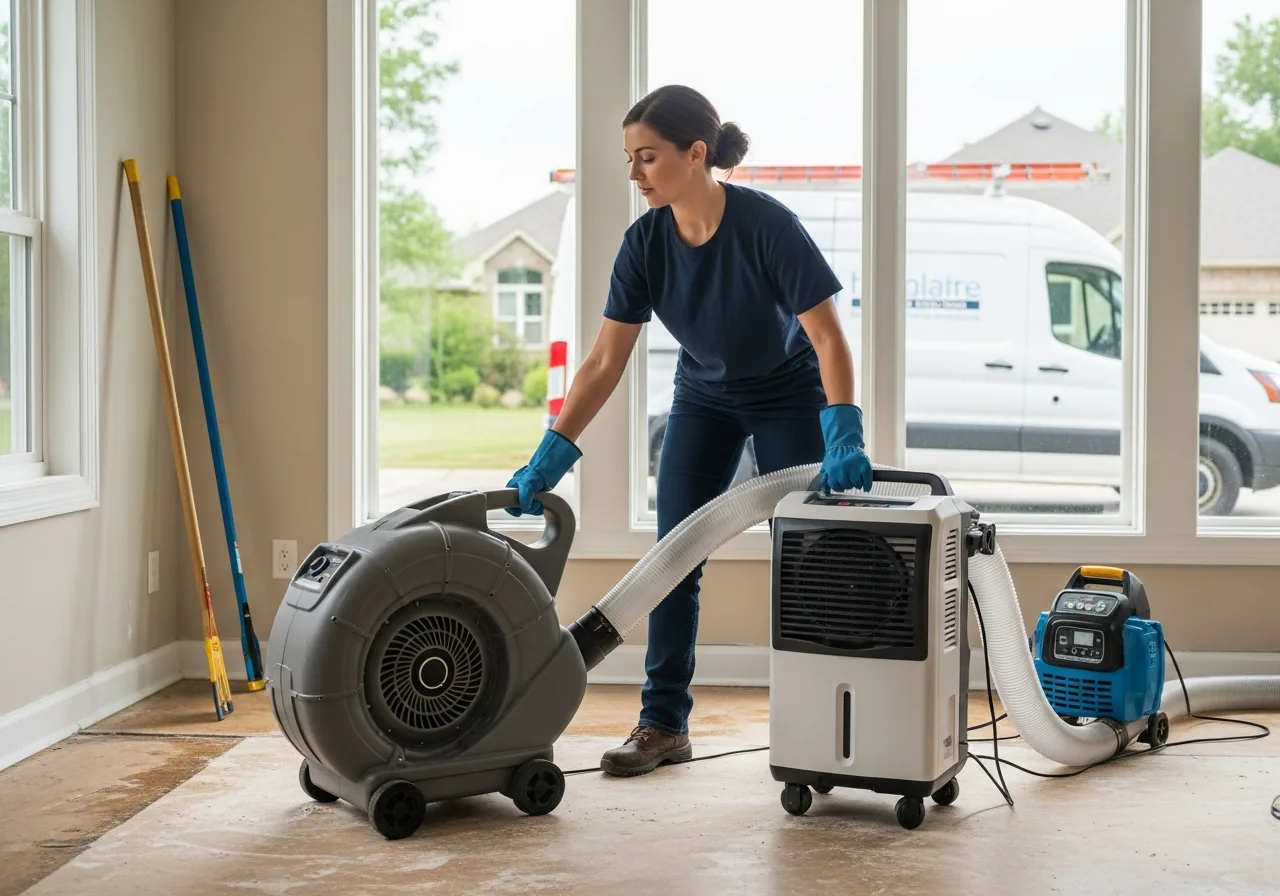
Answer the 2am pipe burst in 30 seconds. Dispatch the water-extraction crew and the air movers and the dehumidifiers to one address. Document the loss in 80 timestamped photos so the carrier closes the claim in 12 days.
$1 for 14 days, then $19/mo. Card required. Cancel any time.
$79/mo vs $99–$299 industry standard·20-min migration from HCP, Jobber, ServiceTitan·No per-seat fees, ever
Features restoration shops actually use
Built for Restoration Companies
The 5 things that decide whether the carrier pays in 12 days or 12 weeks. You need 24/7 emergency dispatch, photo and moisture-reading documentation per room, drying log per air-mover with daily readings, Xactimate-ready exports for the adjuster, and milestone billing on the multi-week job. All in one app. Built by people who've extracted 4 inches of water from a Houston basement at 3:47am while the homeowner cried in the kitchen.
24/7 Emergency Dispatch
The 2am pipe-burst call comes in. Your closest mitigation crew with the extraction truck gets it in one tap. Customer gets an automatic text. Marcus's crew is on the way. ETA 32 minutes. Bringing extraction truck plus 6 air movers plus 2 dehumidifiers. Customer stops crying. Crew opens the app and sees the address, loss type which is Cat 2 water from supply line, and the carrier on file.
Photo and Moisture-Reading Documentation
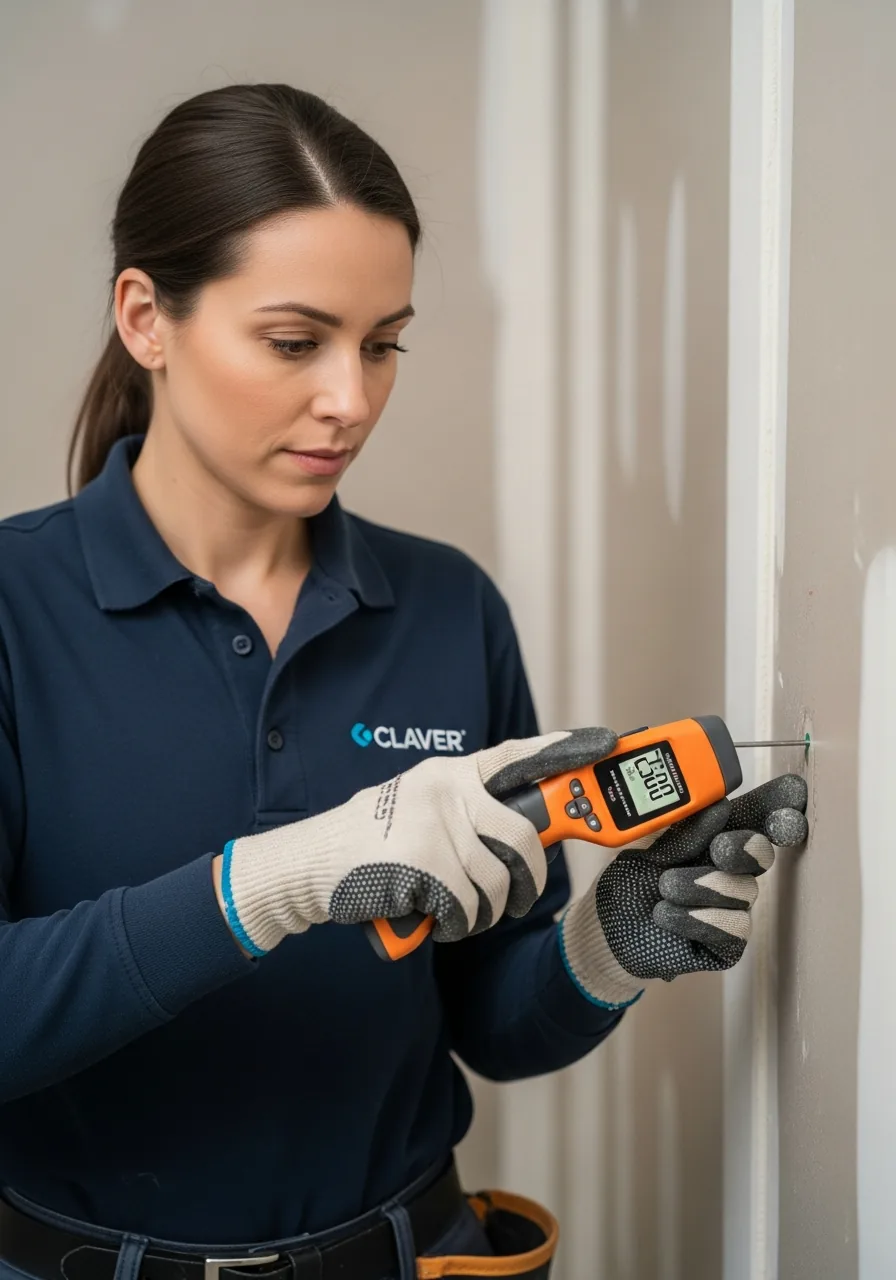
Every affected room gets pre-mitigation photos and moisture readings for subfloor, drywall, and baseboards. Every drying day adds new readings. The PDF the adjuster opens is unfightable. Your supplements get approved on first pass.
Drying Log Per Air Mover
Every air mover and dehu logged with placement, daily moisture reading, RH and temp. The carrier asks why drying took 7 days instead of 4. You pull up the log. Subfloor was at 28% MC on day 3. It dropped 0.8% per day and hit 14% on day 7. Standard of care met.
Xactimate-Ready Exports
Line items match Xactimate codes. Photo packages bundle automatically by room. Sketch and dimensions auto-format. Your estimator stops re-keying everything into Xactimate at midnight. The export goes straight to the adjuster ready for review.
Milestone Billing on Multi-Week Jobs
Mitigation invoice when drying complete. Reconstruction deposit at signing. Progress payments at framing, drywall, paint, and final. Each milestone auto-triggers a Stripe charge or ACH pull from the carrier or homeowner deductible. You stop floating $24,000 of equipment and labor for 90 days.
Included on Crew at $39 a month or Business at $79 a month. Starter ($19/mo) covers unlimited jobs, quotes, invoices, Stripe payments, customer portal, online booking, recurring billing, and CSV export. Step up to Crew for texting, AI, and dispatch.
Why restoration shops switch
Why Restoration Companies Choose Claver
The Most Documentation-Heavy Trade
Restoration is the most documentation-heavy trade in the field service business. The carrier doesn't pay because you did good work. They pay because the file proves you did good work. Every photo you didn't take, every moisture reading you forgot to log, every air-mover placement you didn't document is a supplement that gets denied at month two.
The shops that win run two things differently. They document like the carrier is going to fight every line item because they will. They bill in milestones so they're not floating $24,000 of equipment and labor while waiting on a check that won't come for 90 days.
The documentation is the product. The water work is just what gets you in the door.
When the 2am pipe-burst call hits, your dispatch board shows every crew's GPS location and what's currently in their truck. Marcus has the extraction truck loaded out plus 6 air movers plus 2 dehumidifiers and is closest to the loss. Drag the job to Marcus. Customer gets an automatic text in 4 seconds. Marcus's crew is on the way. ETA 32 minutes. Bringing extraction truck plus 6 air movers plus 2 dehumidifiers. The customer stops crying. Marcus opens the app and sees the address, loss type which is Cat 2 water from supply line, affected square footage, the carrier on file which is State Farm with claim number not yet assigned, and any prior loss history at the address.
The On-Site Documentation Workflow
On-site, the documentation workflow is what separates a 12-day claim from a 12-week supplement battle. Marcus structures the job around 60-100 timestamped, GPS-tagged photos. You get pre-mitigation conditions per affected room, moisture readings on the subfloor and drywall and baseboards which is 28% MC on the kitchen subfloor well above the 16% standard, the source of loss which is a failed Sharkbite fitting under the sink, the equipment placement which is 6 air movers plus 2 dehus mapped to the kitchen, dining room, and living room, and the daily drying readings. Every photo and every reading saves to the customer record automatically. The PDF the adjuster opens at the end of mitigation is unfightable.
Drying logs are the part most shops underestimate. Carriers attack them first when they want to deny the supplement. Day 1: kitchen subfloor 28% MC, dining 22%, living 18%. Day 3: kitchen 24%, dining 17%, living 14% which achieved standard. Day 5: kitchen 19%, dining 14% which achieved. Day 7: kitchen 14% which achieved standard. When the carrier asks why drying took 7 days instead of 4, you pull up the log and show the kitchen subfloor was 12 points above standard on day 1. The curve was the textbook drop of 1 to 1.4 points per day with the equipment you placed. Standard of care met. Supplement approved.
The Xactimate-Ready Export
The Xactimate-ready export is the part that gets you paid faster. Claver structures every line item with Xactimate codes. WTR-EXTR for water extraction, EQU-AM for air mover, EQU-DEH for dehumidifier, FRAM-LBR for framing labor. Photo packages bundle by affected room. Room sketches with dimensions auto-format to the Xactimate template. Your estimator stops spending 4 hours at midnight re-keying everything. The export goes straight to the adjuster ready for review. First-pass approval rate goes from 40% to 80%. Your A/R aging on insurance jobs drops from 67 days to 22.
Milestone billing on the reconstruction side is what keeps you solvent through the 90-day claim cycle. Mitigation invoice goes out the day drying completes. The carrier pays in 14 days. Reconstruction deposit at signing which is the homeowner deductible. Progress payments at framing, drywall, paint, and final. Each milestone auto-triggers a Stripe charge or ACH pull. You stop floating $24,000 of equipment and crew labor and materials waiting for a check that won't come for 90 days. You stop turning down the next 2am call because cash flow is tight.
Cancel anytime. 20-minute migration from your current tool.
Pricing
Pricing That Works for Restoration Shops
$19/mo to start. $39/mo for growing teams. $79/mo for the full toolkit. AI summaries, app phone line, 24/7 dispatch, photo and moisture documentation, milestone billing, Xactimate-ready exports. Same plans as every Claver page. No restoration upsell.
Simple pricing, no free tier
Every plan includes unlimited jobs, quotes, invoices and Stripe payments. Texting and AI start on Crew. The phone system and full back office are on Business.
$1 for your first 14 days on Starter · Cancel anytime · Your data exports in CSV
Common questions
Common restoration software questions
No marketing dance. The questions restoration owners actually ask before they sign up.
Does Claver handle insurance claim documentation for water/fire/mold?+
Yes. Every job structures around 60-100 timestamped, GPS-tagged photos plus daily moisture readings on subfloor, drywall, baseboards. Photos and drying logs auto-bundle to insurance-ready PDF. Supplement requests get photo backup attached automatically. Most Claver restoration shops report first-pass approval rate going from 40% to 80%, and A/R aging on insurance jobs dropping from 67 days to 22 within their first quarter.
Does it export to Xactimate?+
Yes. Every line item structures with Xactimate codes (WTR-EXTR for water extraction, EQU-AM for air mover, EQU-DEH for dehumidifier, FRAM-LBR for framing labor, etc.). Photo packages bundle by affected room. Room sketches with dimensions auto-format to the Xactimate template. Your estimator stops re-keying everything at midnight, the export goes straight to the adjuster ready for review.
Can I import customers from DASH, Encircle, or PSA?+
Yes. Export your customer list as CSV from your current tool. DASH, Encircle, PSA, Restoration Manager, ServiceTitan, and upload it to Claver. The wizard maps the columns. Most restoration shops finish the migration in 30-45 minutes (more historical jobs and more equipment records than other trades). We'll personally help if anything looks off, email [email protected].
Does Claver support milestone billing on reconstruction?+
Yes. Mitigation invoice goes out the day drying completes (paid by carrier in 14 days). Reconstruction deposit at signing (homeowner deductible). Progress payments at framing, drywall, paint, final. Each milestone auto-triggers a Stripe charge or ACH pull. You stop floating $24,000 of equipment and crew and materials for 90 days waiting on a check.
What does Claver cost for a restoration shop?+
$19/mo for Starter (2 users). $39/mo for Crew (8 users) when you want texting, AI, and the dispatch board. $79/mo for Business with the full toolkit, 24/7 dispatch, milestone billing, photo and moisture documentation, drying logs per air mover, Xactimate-ready exports. No contract. Cancel anytime.
Your current software owns your customer list. We don't want to.
Your data exports as CSV the day you leave — your full customer list, every job, every invoice. Your payments go directly through your own Stripe, never ours. Claver starts at $19/mo flat, no contract, no per-seat fees.
Start your $1 trial
14 days for $1, then $19/mo. Cancel any time from settings.