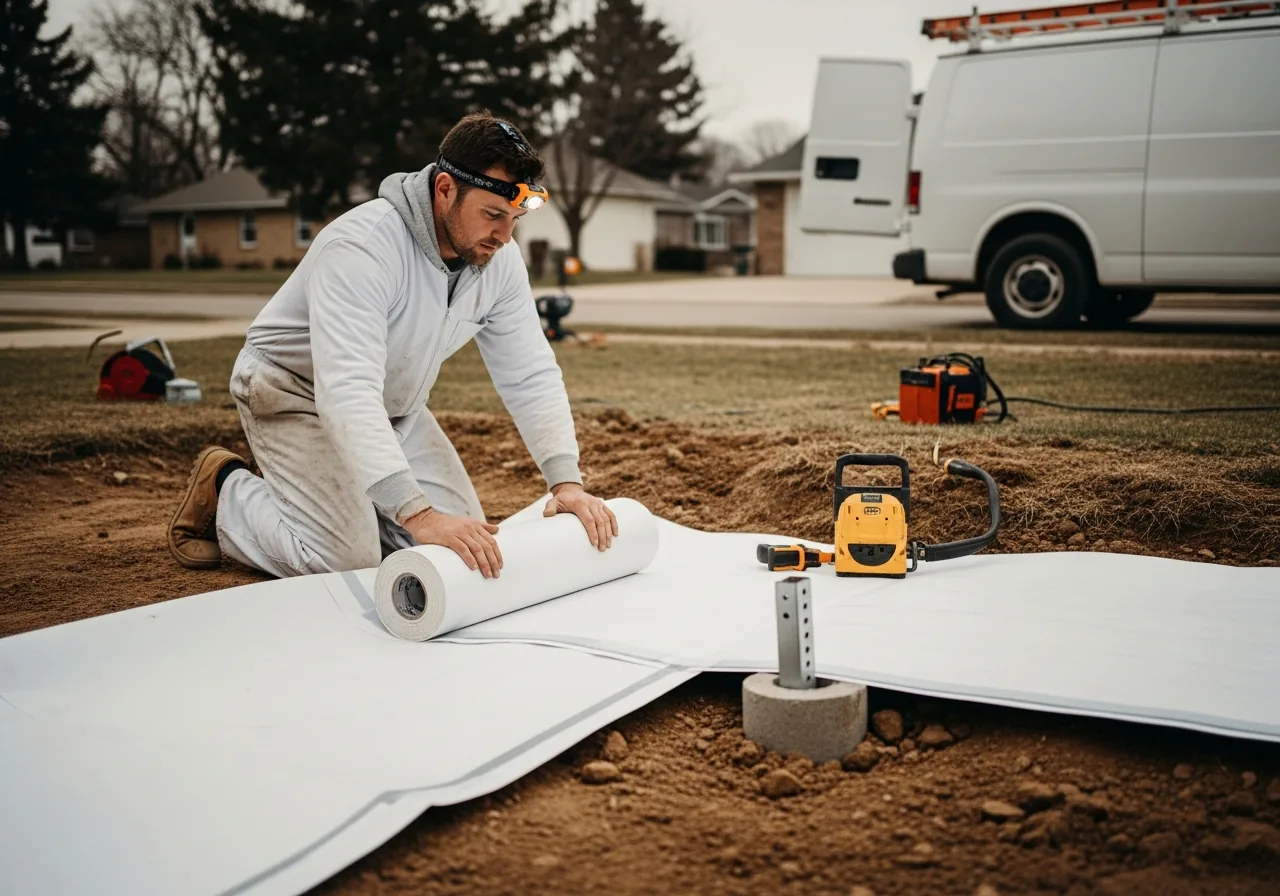
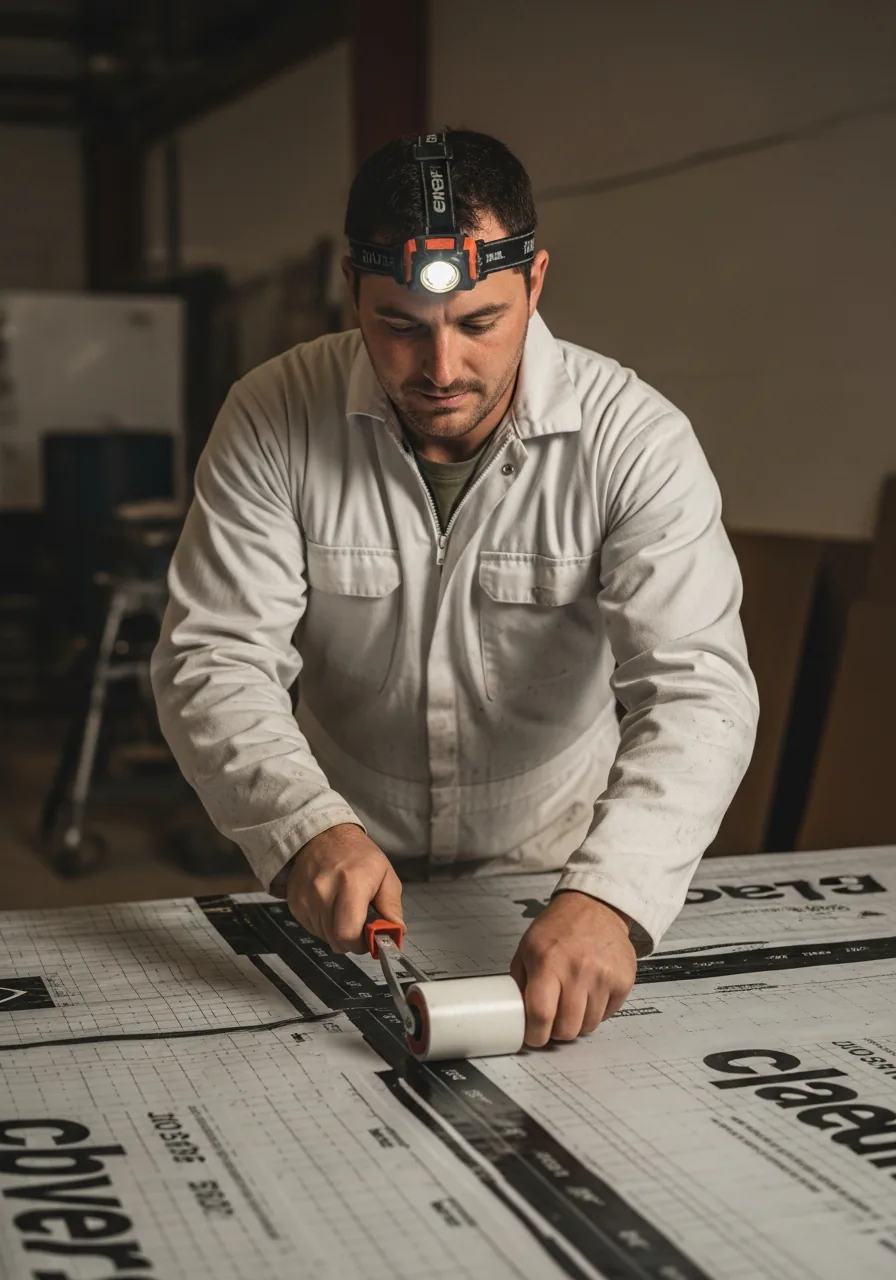
Send a $14,000 crawl space encapsulation quote with 20-mil vapor barrier + dehu + sump in one package. Document the moisture readings + sump pump install for the warranty. Track which Charlotte Google Ads keyword paid for the $24K interior basement waterproofing.
$1 for 14 days, then $19/mo. Card required. Cancel any time.
$79/mo vs $99–$299 industry standard·20-min migration from HCP, Jobber, ServiceTitan·No per-seat fees, ever
Features waterproofing shops actually use
Built for Crawl Space & Basement Waterproofing Companies
The 5 things that decide whether you close the $14K crawl encapsulation or watch it go to the next basement company, on-site quotes with sqft + vapor barrier + dehu + sump packaging, milestone billing across the 3-day install, photo + moisture documentation that protects the lifetime warranty, dehu + sump return-visit recurring service, and Google Ads ROI on $40-a-click waterproofing keywords. All in one app. Built by people who've installed a 20-mil StegoCrawl vapor barrier in a 1,400-sqft Charlotte crawl space at 38° in February.
On-Site Quotes with Encapsulation Packaging*
Walk the crawl space. Photograph existing conditions (28% moisture content on the soil, exposed dirt, visible mold on joists, vented crawl admitting humid summer air). Measure sqft (1,400). Build the quote in 8 minutes, 20-mil StegoCrawl vapor barrier + 70-pint Aprilaire dehu + 1/3 HP sump pump + spray foam at the rim joist + vent closures + drainage matrix = $14,000 with 3-day install + lifetime warranty. Customer signs digitally and pays a 25% deposit before you back out of the driveway.
Milestone Billing Across 3-Day Install*
25% deposit at signing. 25% at material delivery. 30% at vapor barrier + dehu install Day 2. 20% at sump + final + customer walk-through. Each milestone auto-triggers a Stripe charge or ACH pull. You stop floating $5,200 of vapor barrier + dehu + sump for 3 weeks waiting for a final check.
Photo + Moisture Documentation*
Pre-install: moisture meter readings on the soil + joists + subfloor at 6 reference points (typical 28-36% in a wet uncoated crawl). Day 1-2: vapor barrier overlap photos (12-inch overlaps + tape sealed), dehu placement, sump pump install with check valve + GFCI outlet. Post-install: 30-day follow-up moisture reading (target 12-18%, proves the system works). The lifetime warranty conversation in Year 5 is honest because the install photos + 30-day reading prove the system was correct.
Dehu + Sump Recurring Service*
Customer signs up for annual service: dehu filter swap + sump pump test + drainage check at $185/year recurring. Stripe pulls the card on the anniversary date. That's $185 × 5 years = $925 of recurring revenue per customer on top of the $14,000 install, and the dehu doesn't fail at year 4 because someone is checking it.
Google Ads + Lead Source ROI*
Waterproofing keywords cost $30-$60 per click. Claver captures the click ID and follows it through quote → signed contract → final payment. "Crawl space encapsulation Charlotte" generated 14 clicks, 9 quotes, 3 signed jobs worth $42,000. "Basement waterproofing near me" generated 78 clicks, 1 quote, $4,800 in jobs.
* Included on Crew at $39 a month or Business at $79 a month. Starter ($19/mo) covers unlimited jobs, quotes, invoices, Stripe payments, customer portal, online booking, recurring billing, and CSV export. Step up to Crew for texting, AI, and dispatch.
Why waterproofing shops switch
Why Crawl Space & Basement Waterproofing Companies Choose Claver
Brutal Warranty Economics
Crawl space encapsulation and basement waterproofing is a high-ticket residential trade with brutal warranty economics. The customer is paying $14,000 for a system that's supposed to last 25 years. If the dehu fails in year 4 or the vapor barrier seam splits in year 7, she's calling her lawyer, not your office. The shops that win two things differently: they document every install with moisture readings + photos (so the warranty conversation is honest in year 5), and they sell the annual recurring dehu + sump service (so the system actually gets serviced and doesn't fail).
The shops that lose are still doing the 2010 playbook: install the system, hand the customer a paper warranty certificate, never check the dehu again. Year 4 the dehu's filter is clogged with fiberglass dust, the sump pump's check valve is failing, the vapor barrier seam at the south wall has a 14-inch separation. Customer calls a lawyer. You eat $14,000 in repairs.
Photo + moisture documentation is the engine. Recurring annual service is what protects the warranty.
When you walk Mrs. Castillo's 1923 Charlotte bungalow crawl space on a Saturday morning, the quote builds itself in the app. Photograph the existing conditions (1,400 sqft crawl, exposed dirt floor, 4 vents that admit summer humidity, visible white efflorescence on the foundation walls indicating moisture wicking, mold on the floor joists at the southeast corner from chronic 70%+ relative humidity, no current dehu or sump). Take moisture readings at 6 reference points: soil 32% MC, foundation walls 18%, joists 24%, subfloor 16%. Customer picks the full encapsulation package: 20-mil StegoCrawl vapor barrier (overlapped 12 inches + tape-sealed at seams + mechanically attached to walls 6 inches up), 70-pint Aprilaire E70 dehumidifier, 1/3 HP Zoeller sump pump with check valve + GFCI outlet, spray foam at the rim joist (R-19 closed-cell), aluminum vent closures, perimeter drainage matrix at the dirt-to-wall transition. Build the quote: $14,000 (vapor barrier $4,200 + dehu $1,850 + sump + drainage + spray foam + 3-day labor + permit + lifetime warranty). Customer sees the breakdown. She signs digitally, pays a $3,500 deposit. Materials delivered Friday. Install starts Monday morning.
Photo and Moisture Documentation
Photo + moisture documentation is what protects the lifetime warranty. Claver structures every install around timestamped photos + numerical readings: pre-install moisture meter readings at 6 reference points (soil 32% MC, walls 18%, joists 24%, subfloor 16%), pre-install photos of every existing condition (efflorescence, mold, vent locations, foundation cracks). Day 1: spray foam at rim joist (full coverage, no gaps), drainage matrix install at the perimeter. Day 2: vapor barrier overlap photos (12-inch overlaps + tape-sealed at seams + mechanically attached to walls 6 inches up). Day 3: dehu placement (centered in the crawl with the condensate line draining to the sump), sump pump install with check valve + GFCI outlet + power tested, vent closures sealed. 30-day follow-up: moisture meter reading at the same 6 reference points (target post-install: soil at 14% MC, walls at 12%, joists at 12%, subfloor at 10%, proves the system works). The lifetime warranty conversation in Year 5 is honest because the install photos + 30-day reading + annual service records prove the system was correct from Day 1.
Recurring annual dehu + sump service is the side business that holds the customer for 5 years and protects your lifetime warranty. Customer signs up for annual service at $185/year: dehu filter swap (1 filter included), sump pump float test + check valve check + GFCI test, drainage matrix flush, vapor barrier seam check (look for the 14-inch separation that develops at year 4 if not maintained), moisture meter reading at the 6 reference points (compared to 30-day baseline). Stripe pulls $185 on the anniversary date every year. The customer never has to remember to call. $185 × 5 years × 28 customers = $25,900 of recurring annual service revenue, and 28 systems that don't fail at year 4 because someone is checking them.
Which Scope Pays
Job costing tells you which scope pays. Your $14,000 1,400-sqft crawl encapsulation shows 38% margin (3-day install, $5,200 materials, lifetime warranty). Your $24,000 interior basement waterproofing (perimeter French drain + sump + vapor barrier on walls + spray foam) shows 28% margin because the trench digging took 2 days of jackhammer + concrete saw work. Your $4,200 small-crawl encapsulation (400 sqft) shows 51% because the labor was 1 day and the materials scaled down faster than the labor. Now you know which scope to push.
And here's where most waterproofing shops fly blind: marketing spend. You're paying $30-$60 per click on Google Ads for keywords like "crawl space encapsulation [city]" and "basement waterproofing." Some clicks become $24,000 interior basement jobs. Some become nothing. Claver captures the Google click ID when someone visits your site and tracks it through quote → signed contract → final payment. "Crawl space encapsulation Charlotte" generated 14 clicks, 9 quotes, 3 signed jobs worth $42,000. "Basement waterproofing near me" generated 78 clicks, 1 quote, $4,800 in jobs. Triple the first campaign. Cut the second.
Cancel anytime. 20-minute migration from your current tool.
Pricing
Pricing That Works for Waterproofing Shops
$19/mo to start. $39/mo for growing teams. $79/mo for the full toolkit. AI summaries, app phone line, on-site quoting, milestone billing, photo + moisture documentation, recurring annual service, Google Ads ROI. Same plans as every Claver page, no waterproofing upsell.
Simple pricing, no free tier
Every plan includes unlimited jobs, quotes, invoices and Stripe payments. Texting and AI start on Crew. The phone system and full back office are on Business.
$1 for your first 14 days on Starter · Cancel anytime · Your data exports in CSV
Common questions
Common crawl space & waterproofing software questions
No marketing dance. The questions waterproofing owners actually ask before they sign up.
Does Claver build on-site quotes with encapsulation packaging?+
Yes. Walk the crawl space, photograph existing conditions (efflorescence, mold, vent locations, dirt floor, foundation cracks). Take moisture readings at 6 reference points (soil + walls + joists + subfloor). Build the quote in 8 minutes, 1,400 sqft 20-mil StegoCrawl vapor barrier + 70-pint Aprilaire E70 dehu + 1/3 HP Zoeller sump + spray foam at rim joist + vent closures + perimeter drainage = $14,000 with 3-day install + lifetime warranty. Customer signs digitally and pays a 25% deposit through Stripe before you back out of the driveway.
Does it document moisture readings + install photos for the warranty?+
Yes. Claver structures every install around timestamped photos + numerical readings: pre-install moisture readings at 6 reference points (soil 32% MC, walls 18%, joists 24%, subfloor 16%), Day 1-3 photos of every install step (spray foam coverage, vapor barrier 12-inch overlaps + tape seals, dehu placement, sump install + GFCI test, vent closures). 30-day follow-up moisture reading at the same 6 points (target post-install: 10-14% MC, proves the system works). The lifetime warranty conversation in Year 5 is honest because the install photos + 30-day reading + annual service records prove the system was correct from Day 1.
Does it support recurring annual dehu + sump service?+
Yes. Customer signs up for annual service at $185/year: dehu filter swap, sump pump float test + check valve check + GFCI test, drainage matrix flush, vapor barrier seam check (look for the 14-inch separation that develops at year 4 if not maintained), moisture meter reading at the 6 reference points compared to 30-day baseline. Stripe pulls $185 on the anniversary date every year. $185 × 5 years × 28 customers = $25,900 of recurring annual service revenue, and 28 systems that don't fail at year 4 because someone is checking them.
Can I import customers from JobNimbus, ServiceTitan, or Housecall Pro?+
Yes. Export your customer list as CSV from your current tool, JobNimbus, ServiceTitan, Housecall Pro, FieldEdge, and upload it to Claver. The wizard maps the columns. Most waterproofing shops finish the migration in 30-45 minutes (more historical project + warranty data than other trades). We'll personally help if anything looks off. Email [email protected].
What does Claver cost for a crawl space & waterproofing shop?+
$19/mo for Starter (2 users). $39/mo for Crew (8 users) when you want texting, AI, and the dispatch board. $79/mo for Business with the full toolkit, on-site quoting, milestone billing, photo + moisture documentation, recurring annual service, Google Ads conversion tracking. No contract. Cancel anytime.
Your current software owns your customer list. We don't want to.
Your data exports as CSV the day you leave — your full customer list, every job, every invoice. Your payments go directly through your own Stripe, never ours. Claver starts at $19/mo flat, no contract, no per-seat fees.
Start your $1 trial
14 days for $1, then $19/mo. Cancel any time from settings.