Your PRV failed. Your binder is in the cab. The adjuster is waiting.
Claver gives mold remediation owners the documentation stack that actually closes insurance claims. IICRC S520 protocol per condition, air sampling chain-of-custody, PRV clearance tracking, milestone billing tied to carrier draws. Built for Condition 3 jobs where everything has to be right.
$1 for 14 days, then $19/mo. Card required. Cancel any time.
$79/mo vs $99–$299 industry standard·20-min migration from HCP, Jobber, ServiceTitan·No per-seat fees, ever
Features mold remediation companies actually use
Five Things That Decide Whether the Carrier Pays
IICRC S520 protocol documentation per condition. Negative-pressure containment with air sampling chain-of-custody. Milestone billing across the 5-day project. Photo records that satisfy the closeout report. Per-project dispatch so the HEPA scrubber shows up on Day 2. If any one of these breaks down, the supplement gets denied and you eat the difference. Claver ties all five together in one app.
IICRC S520 Protocol Per Condition*
The assessment scope is signed. Claver classifies the project: Condition 1 (settled spore dust, surface cleaning sufficient), Condition 2 (settled spores from a Condition 3 source, structural materials cleanable in place), Condition 3 (actual fungal growth, removal required, containment required, HEPA negative-air required, PRV required). Materials list builds automatically. Crew PPE requirements populate per OSHA 1910.134. You stop hand-building Condition 3 protocols for every new job.
Air Sampling Chain-of-Custody and PRV Tracking*
Claver logs every sample in the chain: collection time, sampling tech, air pump serial and calibration date, spore trap cassette ID, AIHA EMLAP-accredited lab name, shipment date. Results come back by genus. Stachybotrys, Aspergillus, Penicillium, Cladosporium. PRV target: under 1.5x outside-air baseline with no Stachybotrys present. Clearance results push to the customer portal and the carrier claim file automatically.
Milestone Billing Tied to Carrier Draws*
30% at signing. 25% at containment and air baseline complete, Day 1. 25% at remediation complete, Day 3. 10% at PRV clearance and containment dismantled, Day 4. 10% at customer walk-through and reconstruction handoff, Day 5. Each milestone fires a Stripe charge or ACH pull. You stop carrying four weeks of HEPA machine rental and Tyvek on your line of credit while the adjuster sits on the supplement.
Photo Documentation for the Closeout Report*
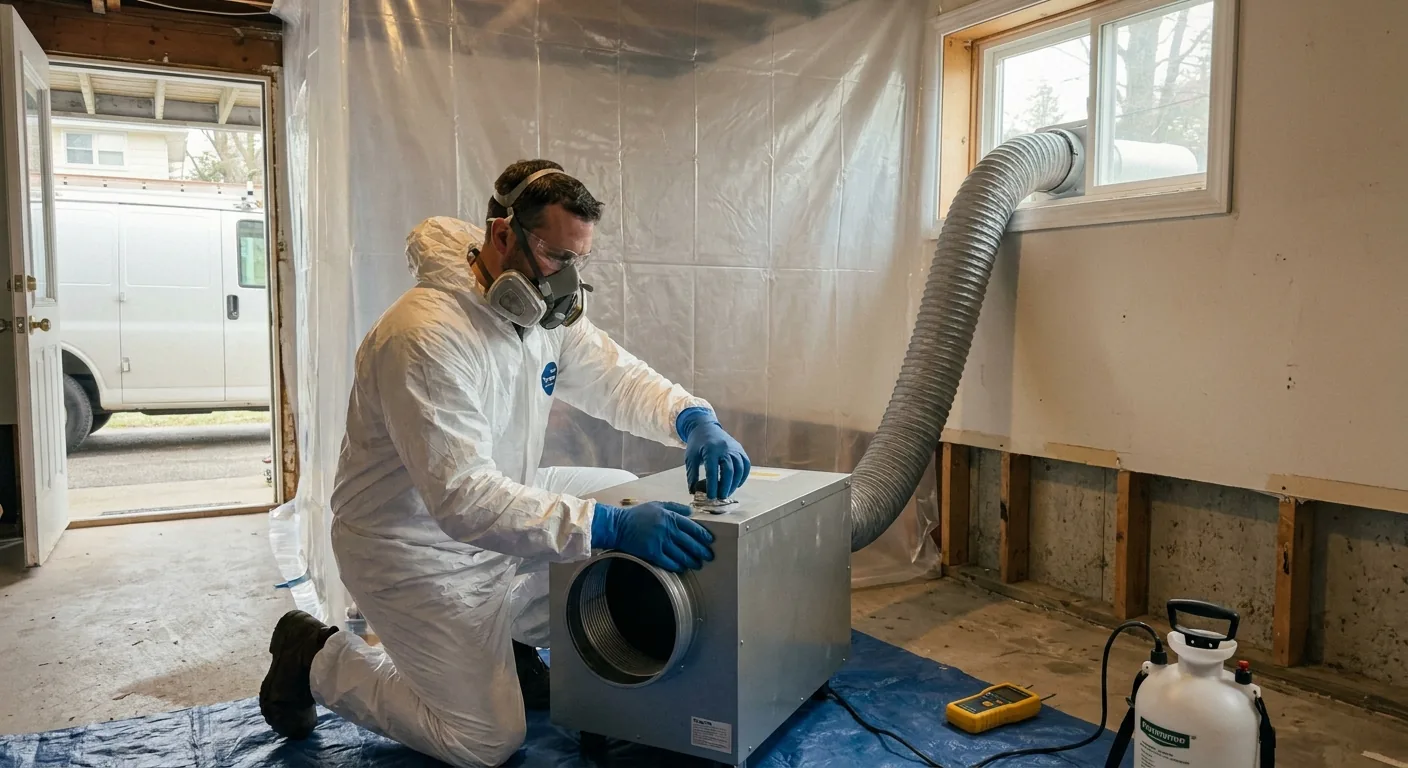
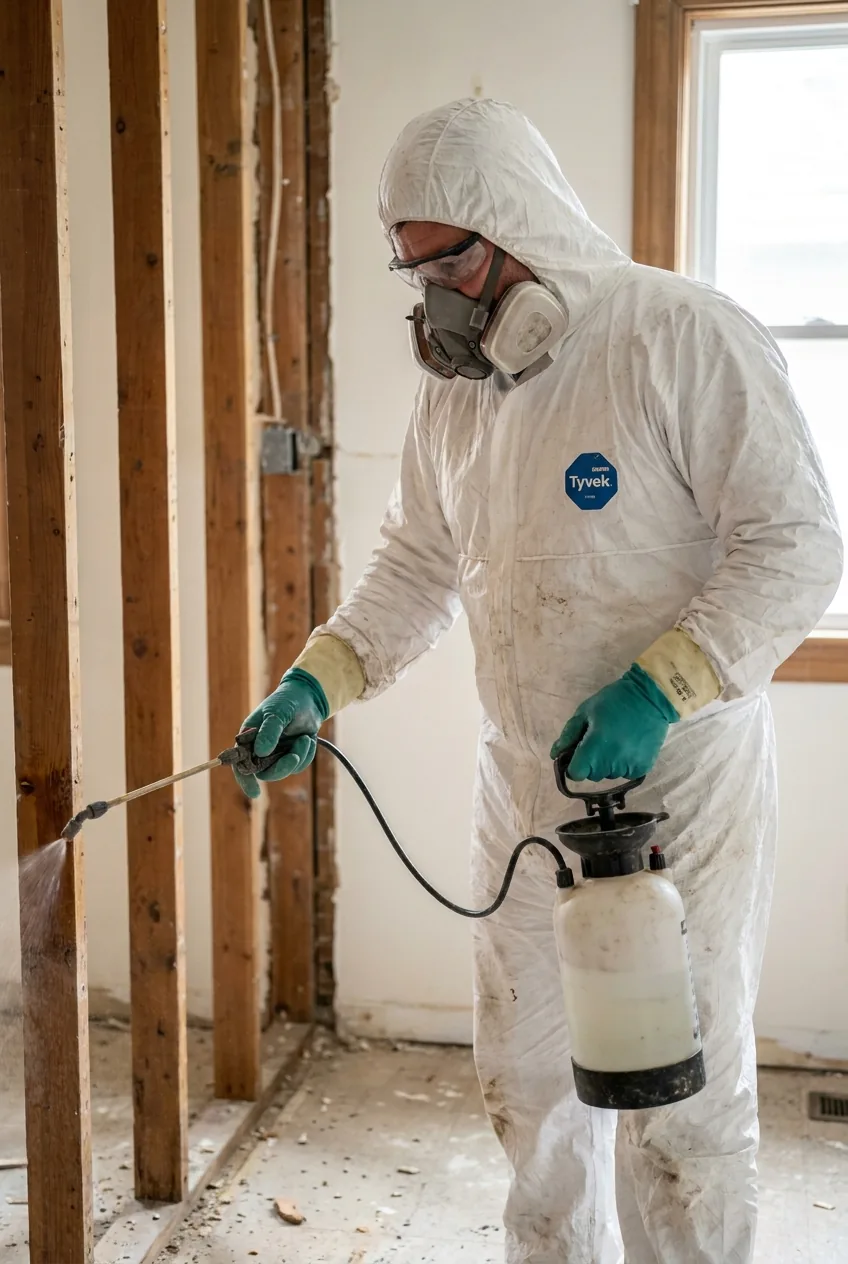
Pre-job: visible growth, moisture readings, source identification, contamination boundaries. During: containment setup with 6-mil poly and zip doors, HEPA negative-air machines running, flood cut at 18 inches above visible contamination, materials bagged. Post: cleaned substrate, HEPA-vac final pass, PRV sample cassette being pulled, lab report PDF. The carrier gets a timestamped photo PDF. Claims that used to drag four weeks close in four days.
Per-Project Dispatch Across a 5-Day Sequence*
Day 1: assessment crew sets containment and pulls baseline air samples. Day 2: remediation crew removes affected material and HEPA-vacuums every surface. Day 3: HEPA scrubbing continues, re-sample pulled. Day 4: PRV clearance sample collected, lab result reviewed, containment dismantled if the test passes. Day 5: customer walk-through, reconstruction crew handed the keys. Claver assigns each crew and sub. Nobody's asking where the negative-air machine is at 7am.
* Included on Crew at $39 a month or Business at $79 a month. Starter ($19/mo) covers unlimited jobs, quotes, invoices, Stripe payments, customer portal, online booking, recurring billing, and CSV export. Step up to Crew for texting, AI, and dispatch.
Why mold remediation companies switch
The Documentation Gap That Costs You the Supplement
The Most Documentation-Heavy Specialty
Mold remediation is the most documentation-heavy specialty in the restoration trade. The IICRC S520 standard mandates protocol per condition, containment per Condition 3, air sampling chain-of-custody, and post-remediation verification before the project closes. The carrier requires every sample, every photo, every chain-of-custody to approve the claim. If your documentation is in a binder in the truck cab, the adjuster denies the supplement and you eat the difference.
The shops that close insurance claims in four days instead of four weeks do two things differently. They generate IICRC S520 protocol per condition automatically so the assessment-to-remediation handoff is structured. They document every air sample and every photo with chain-of-custody so the carrier can approve the claim without a back-and-forth.
Protocol automation is the engine. Air sampling chain-of-custody is the survival kit.
Say the customer calls on a Saturday. Chronic plumbing leak under the slab, finally noticed. Basement has been running above 80% RH for months. You pull out the moisture meter and it confirms what you already suspected. South wall drywall, fiberglass insulation behind it, wood subfloor where the carpet pad was saturated. Black-green dots in the corner. This is Condition 3 per IICRC S520 Section 12.2.2. Actual fungal growth on materials, removal required. Claver classifies it, builds the protocol, and generates the materials list: four HEPA negative-air machines sized for four air changes per hour in the affected area, 6-mil poly, zip doors, decontamination chamber, Tyvek suits, half-face P100 respirators. The quote writes itself. Customer signs digitally, pays the 30% deposit. Project starts in five days after containment setup.
Containment and Air Sampling
Negative-pressure containment and air sampling is what proves the work to the carrier. Six-mil poly walls floor-to-ceiling. Zip doors at every entry. Decontamination chamber at the only access point, three stages, sticky mat, PPE removal room. HEPA negative-air machines running. Claver tracks the containment setup in full. Air samples per IICRC S520: outside-air baseline before containment goes up, work-area baseline inside the affected space, samples during active remediation, final clearance. Each sample logs collection start and stop time, pump serial, cassette ID, lab name, shipment date. Lab returns results by genus within 48 hours. PRV target: under 1.5x outside-air baseline, no Stachybotrys present. Pass means containment comes down. Claver pushes the result to the customer portal automatically.
Milestone billing keeps you solvent through the job. Four HEPA machines, Tyvek suits, 6-mil poly, dump fees. That's real money out before any payment comes in. With Claver, each project milestone triggers a charge. 30% at signing. 25% at containment and air baseline complete. 25% at remediation complete. 10% at PRV clearance and containment dismantled. 10% at customer walk-through. You stop floating three weeks of equipment rental on your line of credit while the adjuster reviews the supplement.
The Photo Record
The photo record is what gets the closeout report accepted without revision requests. Claver structures the documentation: pre-job photos of the contamination with moisture readings at six reference points, source identification photo, contamination boundary markings. During-remediation photos of containment setup, HEPA machines running, materials being removed at the flood cut line, antimicrobial application. Post-remediation photos of clean substrate, HEPA-vac final pass, PRV cassette being pulled from the calibrated pump. Lab report PDF attached. The carrier opens the package and the claim is approvable on its face. Four days instead of four weeks.
And here is where most mold remediation shops fly blind: marketing spend. You are paying real money per click on Google Ads for keywords like "mold remediation" and "black mold removal." Some clicks become five-figure Stachybotrys-positive basement jobs. Some become nothing. Claver captures the Google click ID when someone visits your site and tracks it through assessment, quote, signed contract, and project closeout. You find out which campaigns produce $40K jobs and which ones produce tire-kickers. Then you cut the losers and double down on what works.
Cancel anytime. 20-minute migration from your current tool.
Pricing
Pricing That Works for Mold Remediation Shops
$19/mo to start. $39/mo for growing teams. $79/mo for the full toolkit. IICRC S520 protocol automation, air sampling chain-of-custody, milestone billing, photo documentation, and carrier closeout reports. Same plans as every Claver page. No mold remediation upsell.
Simple pricing, no free tier
Every plan includes unlimited jobs, quotes, invoices and Stripe payments. Texting and AI start on Crew. The phone system and full back office are on Business.
$1 for your first 14 days on Starter · Cancel anytime · Your data exports in CSV
Common questions
Questions mold remediation owners ask before signing up
No marketing dance. Straight answers to what actually matters before you move your shop over.
Does Claver generate IICRC S520 protocol per condition?+
Yes. Claver classifies the project per IICRC S520 Section 12.2.2: Condition 1 (normal fungal ecology, settled spore dust, surface cleaning sufficient), Condition 2 (settled spores from a Condition 3 source, structural materials cleanable in place), Condition 3 (actual fungal growth on materials, removal required, 6-mil poly containment required, PPE required, HEPA negative-air required, PRV clearance required). Auto-generates the project plan, materials list, HEPA negative-air machine count sized for four air changes per hour, 6-mil poly and zip doors and decontamination chamber, Tyvek suits and half-face P100 respirators per OSHA 1910.134. You stop building Condition 3 protocols by hand for every project.
Does it track air sampling chain-of-custody (PRV testing)?+
Yes. Claver tracks every air sample: outside-air baseline, work-area baseline, during-work area, post-cleaning, and final clearance per IICRC S520. Each sample logs collection start and stop time, sampling technician, air pump model, serial, and calibration date, spore trap cassette ID for chain-of-custody, lab name from an AIHA EMLAP-accredited facility, and shipment date. Lab returns the spore count by genus. Stachybotrys, Aspergillus, Penicillium, Cladosporium, Alternaria. Results within 24 to 48 hours. PRV per S520: post-remediation sample under 1.5x outside-air baseline with no Stachybotrys present, plus acceptable visual inspection. Claver pushes the result to the customer portal and the carrier claim file automatically.
Does it support milestone billing tied to insurance carrier draws?+
Yes. 30% at signing, 25% at containment and air baseline complete on Day 1, 25% at remediation complete on Day 3, 10% at PRV clearance and containment dismantled on Day 4, 10% at customer walk-through and reconstruction crew handoff on Day 5. Each milestone auto-triggers a Stripe charge or ACH pull, or coordinates with the carrier for the supplement payment. You stop floating weeks of HEPA negative-air machine rentals, Tyvek, and 6-mil poly on your line of credit waiting for the carrier's check.
Can I import customers from DASH, Encircle, or PSA?+
Yes. Export your customer list as CSV from your current tool, DASH, Encircle, PSA, Restoration Manager, ServiceTitan, and upload it to Claver. The wizard maps the columns. Most mold remediation shops finish the migration in 30 to 45 minutes. Mold shops tend to have more historical air-sample chain-of-custody and insurance documentation than other trades, so it takes a bit longer than a plumbing shop would. We'll personally help if anything looks off. Email [email protected].
What does Claver cost for a mold remediation shop?+
$19/mo for Starter (2 users). $39/mo for Crew (8 users) when you want texting, AI, and the dispatch board. $79/mo for Business with the full toolkit: IICRC S520 protocol automation per condition, air sampling chain-of-custody, milestone billing, photo documentation, carrier closeout reports, project-based dispatch coordination. No contract. Cancel anytime.
Your current software owns your customer list. We don't want to.
Your data exports as CSV the day you leave — your full customer list, every job, every invoice. Your payments go directly through your own Stripe, never ours. Claver starts at $19/mo flat, no contract, no per-seat fees.
Start your $1 trial
14 days for $1, then $19/mo. Cancel any time from settings.